table of contents
A single antivirus subscription won’t protect a modern company. Small business cybersecurity services need to cover identity, endpoints, email, backups, employees, and response.
Most small businesses don’t need a large internal security department. They need the right controls, clear ownership, and a service provider that can act when something goes wrong. The best option depends on your systems, data, staff, customer requirements, insurance policy, and risk profile.
The first step is to understand what a complete service should include.
What small businesses need from cybersecurity services
Small businesses face many of the same threats as larger organizations. They have fewer people, smaller budgets, and less time to investigate suspicious activity. That makes gaps in basic security more costly.
Attackers target email accounts, cloud applications, remote access tools, payment systems, customer data, and exposed internet services. Ransomware remains a serious concern. So do business email compromise, credential theft, fake invoices, and social engineering.
A practical security program should reduce the chance of an attack and limit the damage if one succeeds.
The NIST Small Business Cybersecurity Corner provides useful guidance for organizations that don’t have a full security team. NIST Cybersecurity Framework 2.0 is also a useful structure for identifying, protecting, detecting, responding to, and recovering from security events.
A provider should help you answer basic operating questions:
- Which systems contain sensitive business or customer information?
- Who has access to each system?
- Which devices connect to company resources?
- Which security events need immediate attention?
- How quickly can the business restore operations?
- Who contacts employees, customers, insurers, legal counsel, and law enforcement after an incident?
Good cybersecurity services produce clear answers. They don’t only install software and send alerts.
A security alert has limited value if nobody owns the investigation, the decision, and the response.
The service should also fit the way your business operates. A ten-person accounting firm, a construction company with field workers, and a software company with a cloud application need different controls.
Best small business cybersecurity services
The best small business cybersecurity services are usually layered. No single product covers every risk. Your provider may combine managed detection, endpoint protection, email controls, identity security, vulnerability management, backups, and employee training.
Managed detection and response
Managed detection and response, or MDR, gives a small business access to security monitoring and investigation without hiring a full 24-hour security team.
The service monitors activity across endpoints, identity systems, cloud platforms, and sometimes network devices. Analysts review suspicious behavior, investigate alerts, and recommend or take action based on the agreed service scope.
MDR is useful when your internal IT team manages systems but doesn’t have time to review security events. It is also useful when the business has no security specialist at all.
Ask how the service handles:
- Alert triage and investigation.
- After-hours incidents.
- Endpoint isolation.
- Compromised account suspension.
- Escalation to your internal team.
- Incident documentation.
- Ransomware and business email compromise.
- Communication during a live event.
Some providers offer monitoring only. Others can contain threats, remove malicious software, reset credentials, and coordinate incident response. These are different services. Read the response agreement before signing.
MDR also depends on the data it can see. A provider cannot investigate activity from systems that aren’t connected to its platform. Confirm which endpoints, cloud applications, identity providers, and network assets are covered.

Endpoint, email, and identity security
Endpoint security protects laptops, desktops, servers, and mobile devices. Basic antivirus is useful, but many businesses now need endpoint detection and response, or EDR.
EDR records endpoint activity and looks for suspicious behavior. It can help identify credential theft, malicious scripts, ransomware activity, unauthorized tools, and unusual administrator actions.
Products such as Microsoft Defender, CrowdStrike Falcon Go, and Bitdefender GravityZone may appear in small business security proposals. The right choice depends on your operating systems, existing licenses, internal skills, and MDR provider. A product name alone doesn’t tell you how well the service will operate.
Email security is equally important. It should address malicious attachments, unsafe links, spoofed domains, impersonation, and unusual sender behavior. Domain controls such as SPF, DKIM, and DMARC can reduce spoofing, but they don’t replace user training or payment verification procedures.
Identity security controls access to cloud systems and business applications. At a minimum, require multi-factor authentication for email, financial systems, remote access, administrator accounts, and other systems containing sensitive information.
Password managers help employees create and store unique passwords. Phishing-resistant authentication, including passkeys and FIDO2 security keys, can provide stronger protection for high-risk accounts.
Access should follow the user’s job. Remove accounts when employees leave. Review administrator privileges. Avoid shared accounts. Require separate administrator identities for administrative work.
These controls are not separate projects. An employee with a stolen password can bypass a strong endpoint product if the account has no MFA. A protected email account can still expose the company if an unmanaged laptop has access to it.
Vulnerability management and exposure monitoring
Vulnerability management identifies weaknesses in software, devices, cloud configurations, applications, and internet-facing systems. The service should help you prioritize fixes based on business risk.
A scan alone isn’t a vulnerability management program. You need asset discovery, validation, ownership, remediation deadlines, and retesting.
Ask the provider whether it can identify:
- Exposed remote access services.
- Unpatched operating systems and applications.
- Weak cloud configurations.
- Expired certificates.
- Publicly accessible storage.
- Forgotten subdomains and test systems.
- Exposed credentials or secrets.
- Unsupported hardware and software.
Small businesses often have assets that nobody remembers creating. Old portals, abandoned cloud accounts, development systems, and vendor connections can create unnecessary exposure.
Continuous Threat Exposure Management, or CTEM, expands this work. It combines attack-surface discovery, vulnerability prioritization, validation, and testing. Some specialist providers also use red-team-style methods to confirm whether an external weakness can lead to real access.
That validation matters. A long report with hundreds of findings doesn’t tell you which issue could interrupt operations tomorrow. A useful service connects technical findings to business impact.
For businesses with public applications, customer portals, or cloud infrastructure, include application security and DevSecOps support. Code review, secrets management, dependency checks, cloud access controls, and secure deployment processes can reduce risks before they reach production.
Backup, recovery, and incident response
Backups are part of cybersecurity. They are not only an IT administration task.
A reliable backup service should cover critical files, applications, databases, configurations, and cloud data. It should protect backup accounts with MFA and limit administrative access. It should also prevent compromised users from deleting every backup.
Keep recovery copies separated from ordinary production access. Use offline or otherwise isolated copies where appropriate. Test recovery on a schedule.
A backup that has never been restored is an assumption. It isn’t proof of recoverability.
Incident response services define what happens during a security event. They can include preparation, emergency support, forensic investigation, legal coordination, ransomware response, customer notification support, and recovery assistance.
Small businesses should have a written incident response plan before an incident occurs. The plan should name decision-makers and include contact details for the security provider, insurer, legal counsel, technology vendors, and key executives.
Check whether the provider has an incident response retainer or only offers response as an extra service. Confirm response times, hourly rates, included hours, and the conditions that trigger additional fees.
Employee security awareness and compliance support
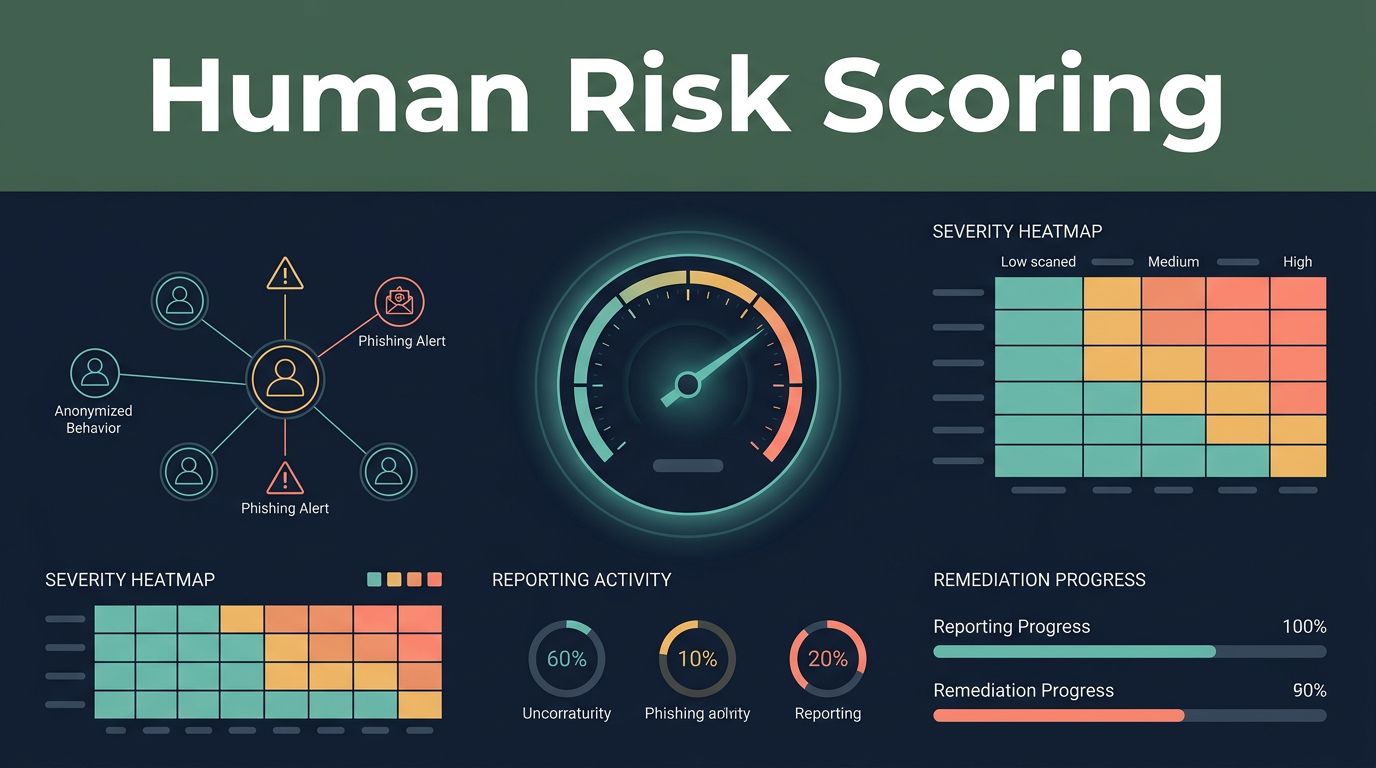
Technology doesn’t remove human risk. Employees can approve a fraudulent payment, disclose a password, upload sensitive data to an AI tool, or trust a convincing voice message from a fake executive.
Security awareness training should be regular and role based. Annual training alone doesn’t address current behavior. Employees who handle payments need fraud verification procedures. Administrators need stronger guidance on privileged access. Developers need secure coding and secrets management support.
Training should cover:
- Phishing and business email compromise.
- Passwords and MFA.
- Suspicious attachments and links.
- Invoice and payment verification.
- Use of personal devices.
- Remote work and public networks.
- Reporting lost devices and suspected incidents.
- Safe use of public AI tools.
- Handling customer and company data.
AI-generated phishing, vishing, and impersonation make verification procedures more important in 2026. A message can look polished. A voice can sound familiar. Employees still need a second verification channel for unusual payment, access, or data requests.
Security awareness services may include simulated phishing, short training modules, reporting metrics, and targeted follow-up. Look for reporting that shows behavior change, not only completion rates.

Compliance support is another common requirement. A provider can help map controls to frameworks or customer questionnaires. It can support evidence collection, policy development, risk registers, and remediation tracking.
Compliance support doesn’t automatically make a company compliant. The business remains responsible for its decisions, policies, and operating practices. Ask whether the provider has experience with the standards that apply to your business, such as PCI DSS, HIPAA, SOC 2, or contractual security requirements.
The NIST Cybersecurity Framework 2.0 small business guide can help organize this work without forcing a small company into an enterprise program.
How to compare cybersecurity providers
Start with coverage, not product names. A provider may advertise endpoint protection, but the proposal may exclude mobile devices, cloud identities, servers, or after-hours response.
Request a written service description. It should state what is monitored, what is excluded, who responds, and what the customer must do.
Compare providers against these areas:
| Area | Questions to ask |
|---|---|
| Monitoring | Which systems are monitored, and when? |
| Response | Can the provider isolate devices or disable accounts? |
| Coverage | Are remote workers, servers, cloud platforms, and mobile devices included? |
| Vulnerabilities | How are findings verified, prioritized, and retested? |
| Backups | What is backed up, where is it stored, and how often is recovery tested? |
| Training | Does the service measure reporting and behavior, or only course completion? |
| Compliance | Which frameworks and customer requirements can the provider support? |
| Reporting | Will leadership receive clear risk, activity, and remediation reports? |
| Support | Who answers during an incident, and what response time applies? |
A managed service provider may be the right fit if you also need help with devices, Microsoft 365, networks, and daily IT operations. An MSSP or MDR provider may be better when your internal IT team needs dedicated detection and response.
A specialist consultancy can help with external attack-surface testing, cloud security, application security, compliance readiness, or incident planning. These services may be project based rather than continuous.
Ask for proof of operating capability. Review sample reports. Request references from businesses with similar systems and risk. Confirm staff coverage, escalation procedures, security certifications, data handling practices, and subcontractor use.
A provider should protect its own environment. Ask about access controls, logging, employee screening, privileged accounts, and the security of its remote management tools.
Review contract terms carefully. Confirm data ownership, termination support, retention periods, breach notification obligations, service credits, and price changes.
Pricing and service models for small businesses
Cybersecurity pricing varies by provider and business risk profile. Common pricing models include per-user, per-device, per-month, project-based, and fixed annual fees.
The cheapest quote may cover only software licenses. A higher quote may include monitoring, investigation, response, reporting, training, and support. Compare the service, not only the monthly number.
Small businesses often use one of three approaches:
| Service model | Best fit | Main limitation |
|---|---|---|
| Security tools managed internally | Businesses with capable IT staff and limited external risk | Internal staff must monitor and respond |
| Managed IT with security services | Businesses needing daily IT and security support | Security depth varies by provider |
| MDR or MSSP service | Businesses needing continuous monitoring and response | Requires good asset visibility and clear escalation |
A staged program can control cost. Start with the systems that can stop revenue or expose sensitive data. Protect administrator accounts first. Add MFA, endpoint controls, tested backups, email protection, patching, and employee reporting.
Then address less visible risks. Review internet-facing assets, vendor access, cloud configurations, application security, and unsupported systems.
Cyber insurance can influence the order. Insurers may ask about MFA, patching, endpoint protection, backups, privileged access, and incident response plans. Treat those requirements as a starting point. They may not cover every risk in your business.
Don’t buy a service you can’t operate. If nobody reviews the reports, assigns remediation, or tests recovery, the subscription won’t produce the expected result.
A practical 90-day security plan
A small business doesn’t need to solve every security issue in one week. It does need a clear sequence.
Days 1 to 30: establish control
Create an inventory of users, devices, applications, cloud accounts, vendors, and internet-facing assets. Identify systems that process payments, store customer information, or support daily operations.
Enable MFA on email, administrator accounts, financial systems, remote access, and backup platforms. Remove inactive accounts. Review administrator permissions.
Confirm that endpoint protection is active and reporting. Apply critical patches. Check that backups are running and protected from ordinary user accounts.
Choose an owner for security decisions. This person may be an operations leader, IT manager, or external provider. Security tasks without an owner usually remain incomplete.
Days 31 to 60: add monitoring and reduce exposure
Connect supported endpoints, identity systems, and cloud services to MDR or an equivalent monitoring service. Define escalation contacts and response authority.
Run an external attack-surface review. Remove unnecessary services. Fix exposed remote access, weak configurations, expired certificates, and high-risk vulnerabilities.
Review email authentication and payment procedures. Require independent verification for bank account changes, urgent payments, and unusual data requests.
Start short security awareness sessions. Make reporting suspicious messages easy. Employees should know where to send a concern and what happens after they report it.
Days 61 to 90: test the program
Restore selected files and systems from backup. Record the time required and any problems. Update the recovery plan.
Run an incident response exercise. Use a realistic scenario, such as a compromised mailbox or ransomware on a shared file server. Test communication, decision-making, legal contact, insurance notification, and technical containment.
Review provider reports with business leaders. Remove findings that no longer apply. Assign owners and deadlines for the remaining issues.
For companies that need external testing, NIST’s broader Cybersecurity Framework resources can help connect technical work to risk management and business outcomes.
Security programs need maintenance after the first 90 days. Review access quarterly. Test backups. Reassess vendors. Scan external assets. Update training when new threats or business processes appear.
When to bring in outside expertise
Some security work needs specialist knowledge. This includes cloud architecture, application security, identity design, penetration testing, executive security leadership, and major incident response.
Hiring every skill internally may not fit a small business budget. An external provider can cover a defined gap while internal staff retain ownership of business decisions.
Choose outside support based on the problem. Use MDR for continuous detection and response. Use CTEM or external testing for unknown internet exposure. Use human risk advisory for employee behavior and security culture. Use recruitment support when the business needs permanent security leadership or technical staff.
A provider should state where its responsibility ends. It should also identify the work your internal team, IT partner, insurer, legal counsel, or software vendors must complete.
If your organization needs help assessing security coverage, reducing human risk, or finding specialist talent, you can Book A Call With Us.
Conclusion
The best cybersecurity service is not the one with the longest feature list. It is the one that protects your highest-risk systems, produces useful information, and gives someone authority to respond.
Start with identity, endpoint protection, email security, backups, employee reporting, and clear incident ownership. Add MDR, vulnerability management, exposure testing, compliance support, and specialist services as your risk profile requires.
Small business cybersecurity services should reduce uncertainty. If a provider can’t explain what it monitors, who responds, how recovery works, and what the service costs, keep looking.