table of contents
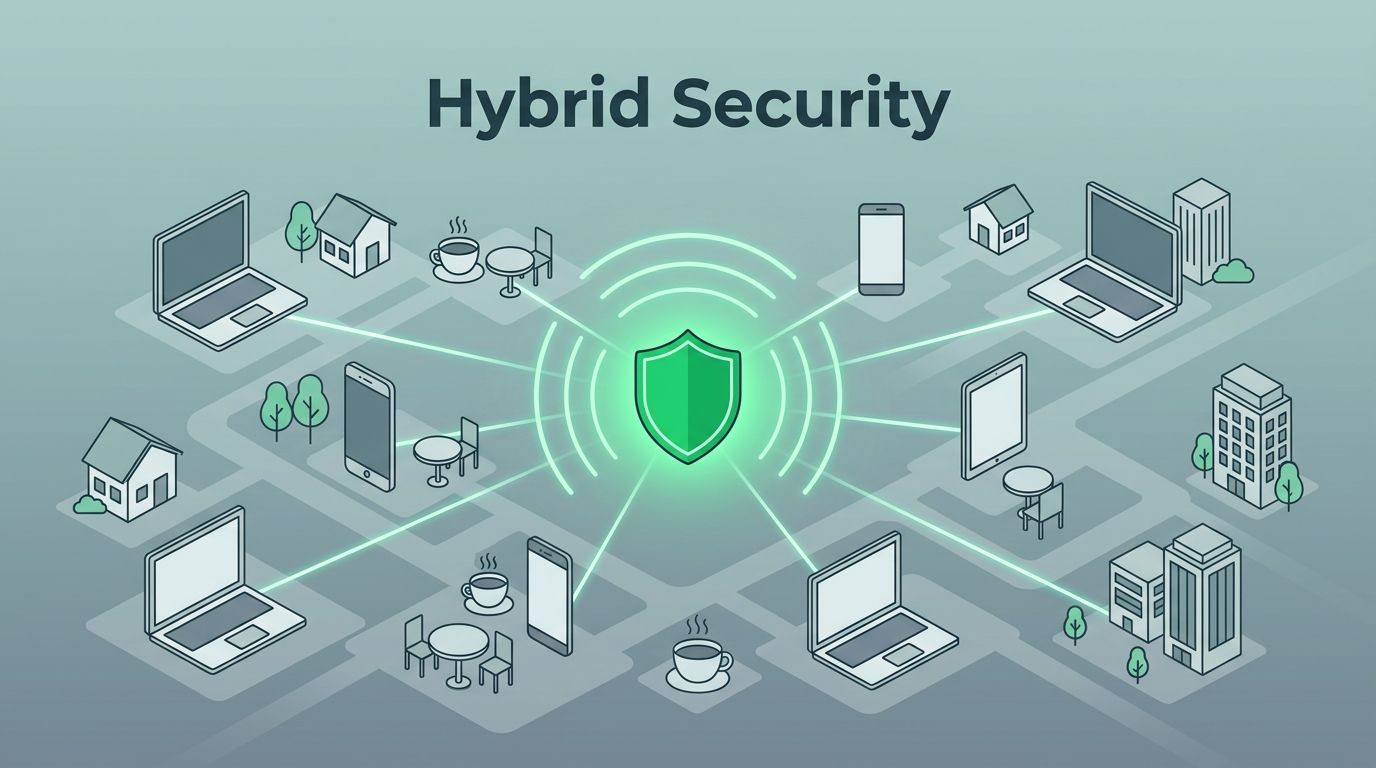
Hybrid work setups spread your endpoints everywhere. Laptops pop up in homes, cafes, and offices. Attacks hit these devices fast. In 2025, 61% of weaponized vulnerabilities turned into active threats within 48 hours. Traditional scans miss this pace.
CTEM endpoint security changes that. It continuously spots, prioritizes, and fixes exposures on distributed fleets. You get real-time control over risks that matter. Security teams focus on what attackers target, not noise.
This approach fits 2026 realities. It ties device data to identities and attack surfaces. Let’s break down how it works for your hybrid fleet.
Challenges of Managing Endpoint Fleets Today
Endpoints in hybrid work scatter across locations. Employees use personal devices. They connect from unsecured Wi-Fi. Visibility drops. You can’t track every laptop or phone.
Attackers love this. They exploit unpatched software or weak configs. Shadow IT adds unknown apps. In 2026, teams find hundreds of thousands of unmanaged services online. These blind spots grow risks.
Identity issues compound problems. One stolen credential accesses multiple devices. Without correlation, you chase ghosts. Remediation lags because manual checks overwhelm staff.
Consider a sales team. Reps log in from hotels using BYOD phones. A phishing email compromises one. It spreads via shared files. Old tools alert late. Damage mounts.
Real-time data shows 96% of teams waste time on unvalidated alerts. False positives eat 42% of effort. Hybrid fleets amplify this chaos.

Distributed setups demand better tools. CTEM endpoint security steps in here. It maps the full picture continuously.
What CTEM Means for Endpoint Security
Continuous Threat Exposure Management, or CTEM, runs a nonstop cycle. It scopes assets, discovers issues, prioritizes threats, validates exposures, and mobilizes fixes. No more quarterly scans.
For endpoints, this means agent-based monitoring plus agentless checks. You see firmware flaws, BIOS risks, and hardware gaps. Traditional tools skip these layers.
In hybrid work, CTEM adapts to change. Devices roam. Users switch networks. The framework keeps pace. It scores risks by exploitability, not just CVSS numbers.
Gartner’s model drives this. Scoping picks critical endpoints like executive laptops. Discovery finds new ones daily. Prioritization uses business context.
Validation tests real paths. Does a vuln lead to data theft? Simulation confirms. Then mobilization automates patches.
CrowdStrike outlines real-time CTEM execution across endpoints and cloud. Microsoft pushes it for proactive defense too, as in their SEM platform.
Teams see 50% better visibility. False urgency drops 84%. Breaches become less likely.
Key Components of CTEM for Endpoints
CTEM endpoint security builds on five pillars. Each handles hybrid fleet needs.
First, scoping defines your fleet. Tag high-value devices: finance laptops, remote servers. Exclude test gear.
Discovery follows. Agents scan live. They spot misconfigs, unpatched OS, rogue apps. Agentless methods cover IoT or guest devices.
Prioritization ranks by reachability. A home laptop exposed online scores higher than an air-gapped one. Factor in threat intel.
Validation proves exploitability. Run safe simulations. Check if EDR blocks it. Most teams skip this; don’t.
Mobilization pushes fixes. Integrate with ITSM for tickets. Automate where safe.
Identity-device correlation ties users to hardware. One login spans phone and desktop? CTEM links them. Phishing hits identity first in 2026.
Attack surface management feeds in. External scans flag public-facing endpoints. CyCognito’s 2026 guide stresses starting from attacker views.
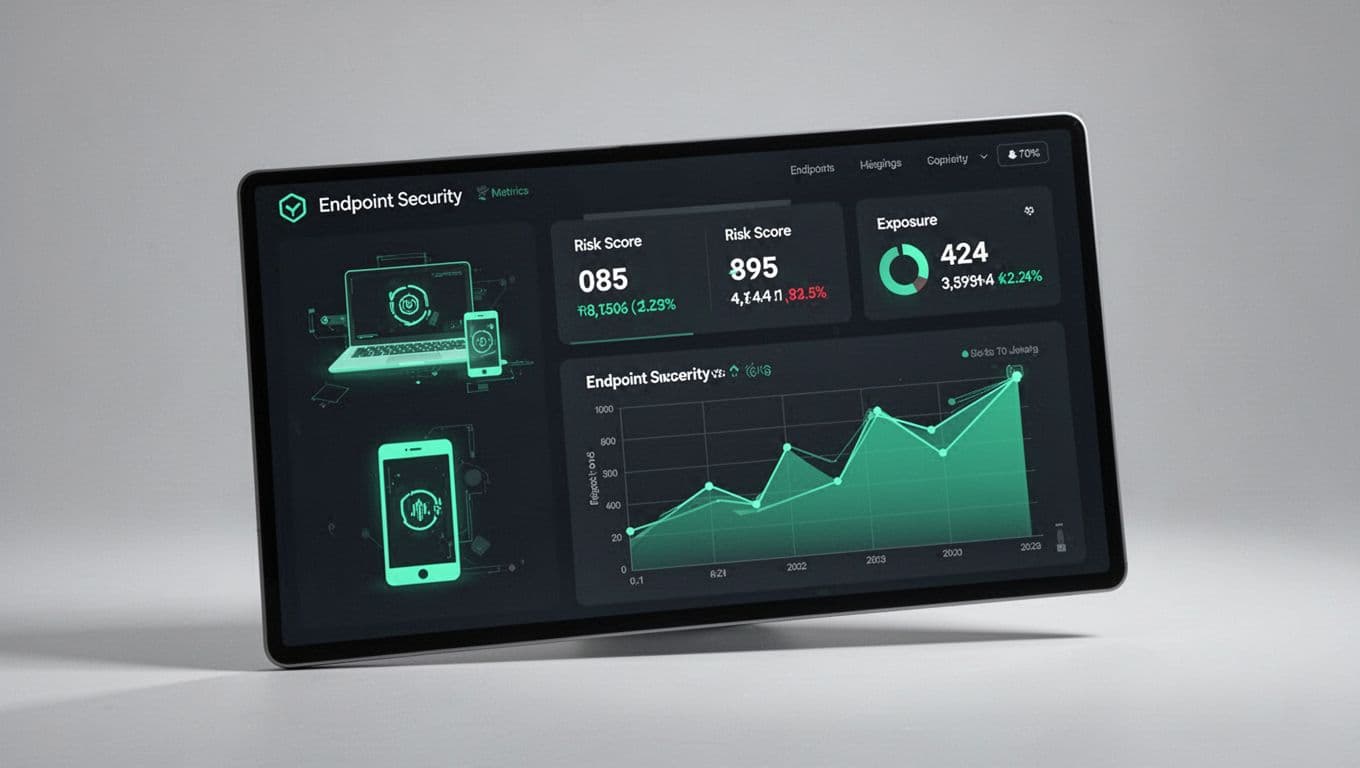
Dashboards pull it together. Risk scores update live. You drill into device details.
Tailoring CTEM to Hybrid Work Risks
Hybrid fleets blend office, home, and travel. Policies must flex. CTEM endpoint security enforces zero trust.
Start with device posture. Check OS updates, antivirus status before network access. Conditional access blocks risks.
Remote endpoints face unique threats. VPNs leak. Home routers expose ports. CTEM maps these.
In 2026, identity is the perimeter. Correlate logins to devices. Spot anomalous behavior: exec’s laptop from a new country.
Attack surface grows with SaaS. Employees share links. CTEM scans external exposures.
Teal notes endpoint strategies shift from firewalls to devices. Fortinet adds unified visibility across assets.
Example: Marketing uses Macs at cafes. CTEM flags weak Wi-Fi encryption. It prioritizes based on data access.
You measure success. Track mean time to remediate. Aim under 48 hours for criticals.
Automation in CTEM for Endpoint Security
Manual fixes fail in hybrid setups. Automation scales CTEM endpoint security.
Playbooks trigger on detections. Vuln found? Auto-scan exploit paths. Valid? Push patch.
SOAR tools orchestrate. Link CTEM to ticketing. Assign owners by device type.
Risk-based rules guide actions. Low-risk config tweak? Auto-apply. High? Escalate.
Identity correlation automates too. New device login? Verify user. Block mismatches.
In 2026, bots handle 70% of remediations. Dwell times drop.
Eclypsium covers firmware automation. SentinelOne lists 2026 tools with real-time responses.
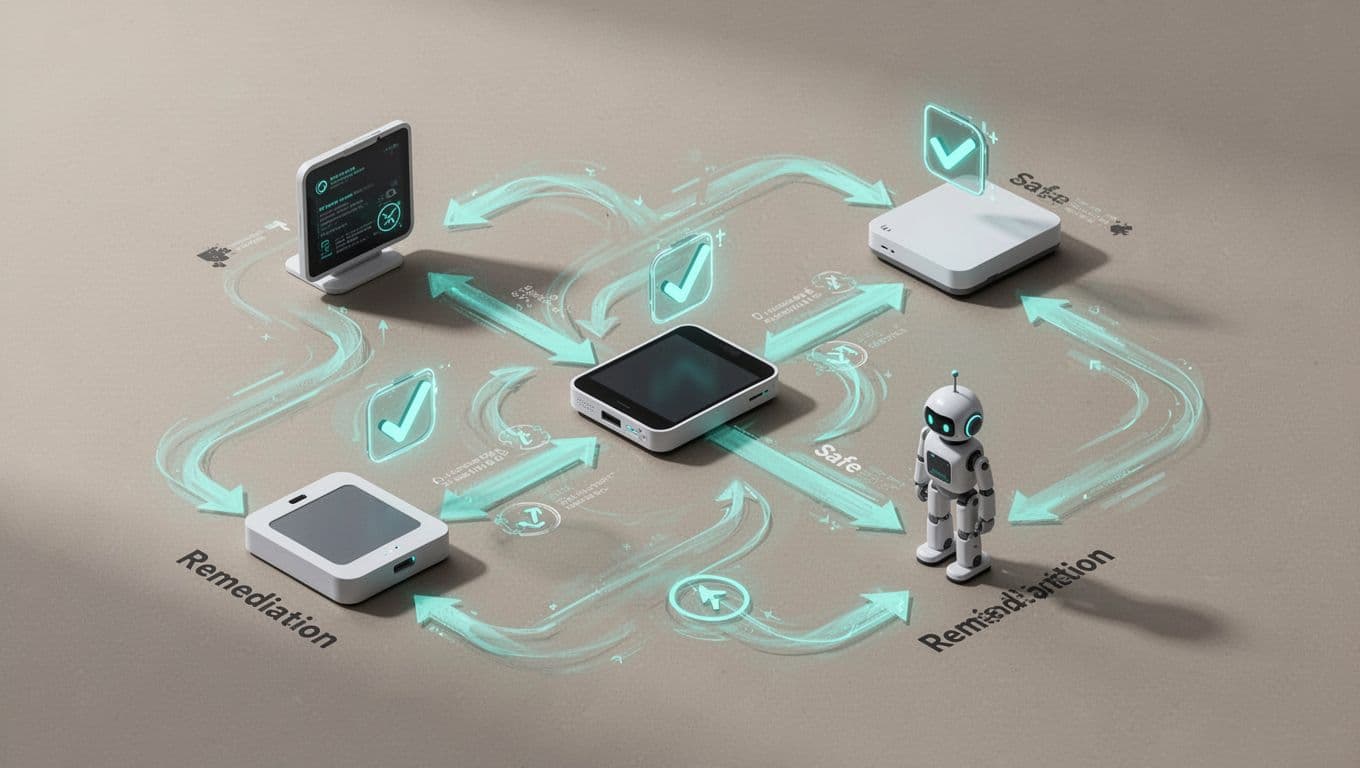
Workflows cut noise. Teams focus on exceptions.
Best Practices Checklist for CTEM in Hybrid Fleets
Security teams need quick wins. Follow these steps for CTEM endpoint security.
Integrate tools first. Unify EDR, ASM, and identity data.
Set scoping rules. Prioritize by asset criticality and user role.
Run daily discoveries. Include external scans.
Prioritize with context. Use business impact scores.
Validate 100% of top risks. Simulate attacks weekly.
Automate low-hanging fruit. Patch routine vulns.
Correlate identities. Map users to fleets.
Measure metrics. Track validation rates, MTTR.
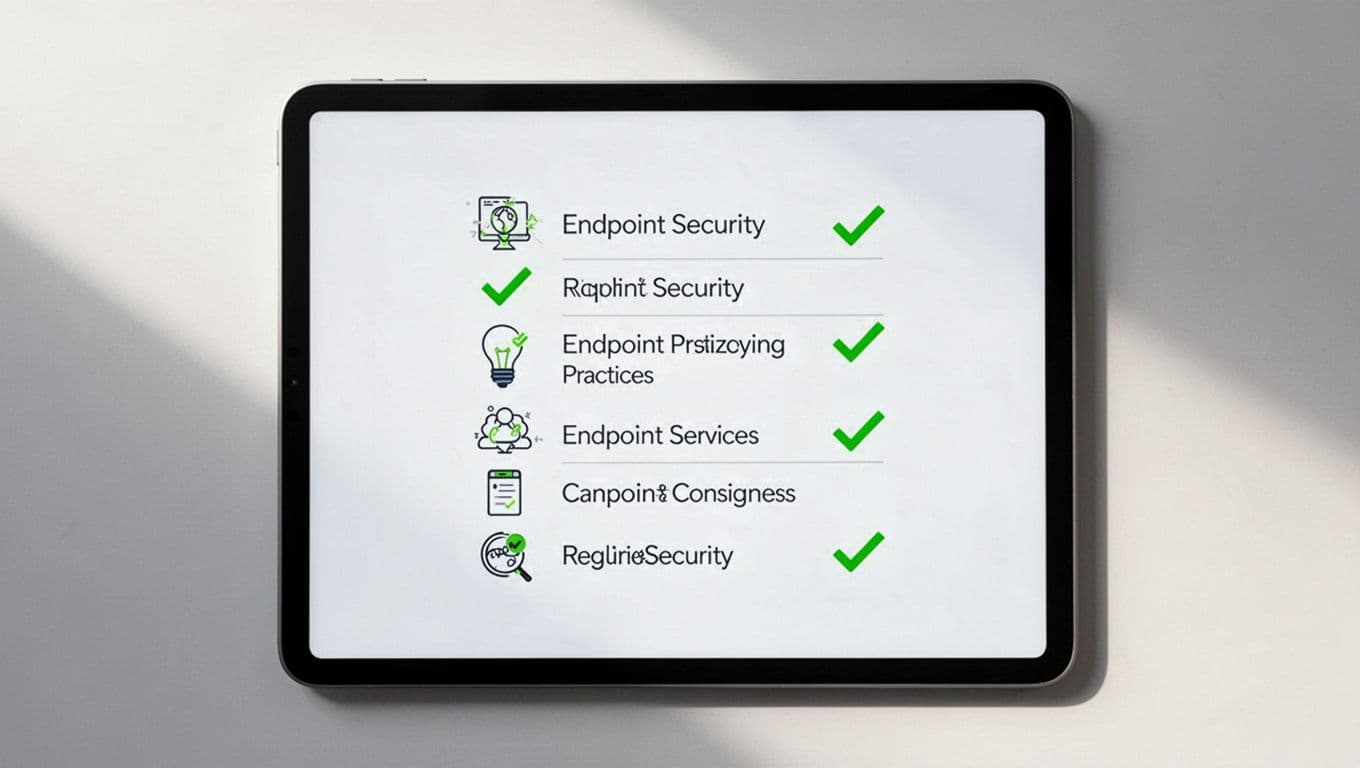
Here’s a summary checklist:
- Scope critical endpoints: List top 20% by risk.
- Discover continuously: Agent plus agentless.
- Prioritize exploitably: Ignore CVSS alone.
- Validate exposures: Test paths.
- Mobilize fast: Automate 50%+ actions.
- Correlate identities: Link users to devices.
- Review monthly: Adjust for changes.
If skills gaps slow you, Book a Discovery Call with Bud Consulting. They source CTEM experts.
Conclusion
CTEM endpoint security fits hybrid fleets perfectly. It cuts through noise with validation and automation. Risks drop because you act on real threats.
Teams gain visibility. Remediation speeds up. In 2026, this is table stakes.
Start small. Scope your fleet today. Build from there. Your endpoints stay secure.