table of contents
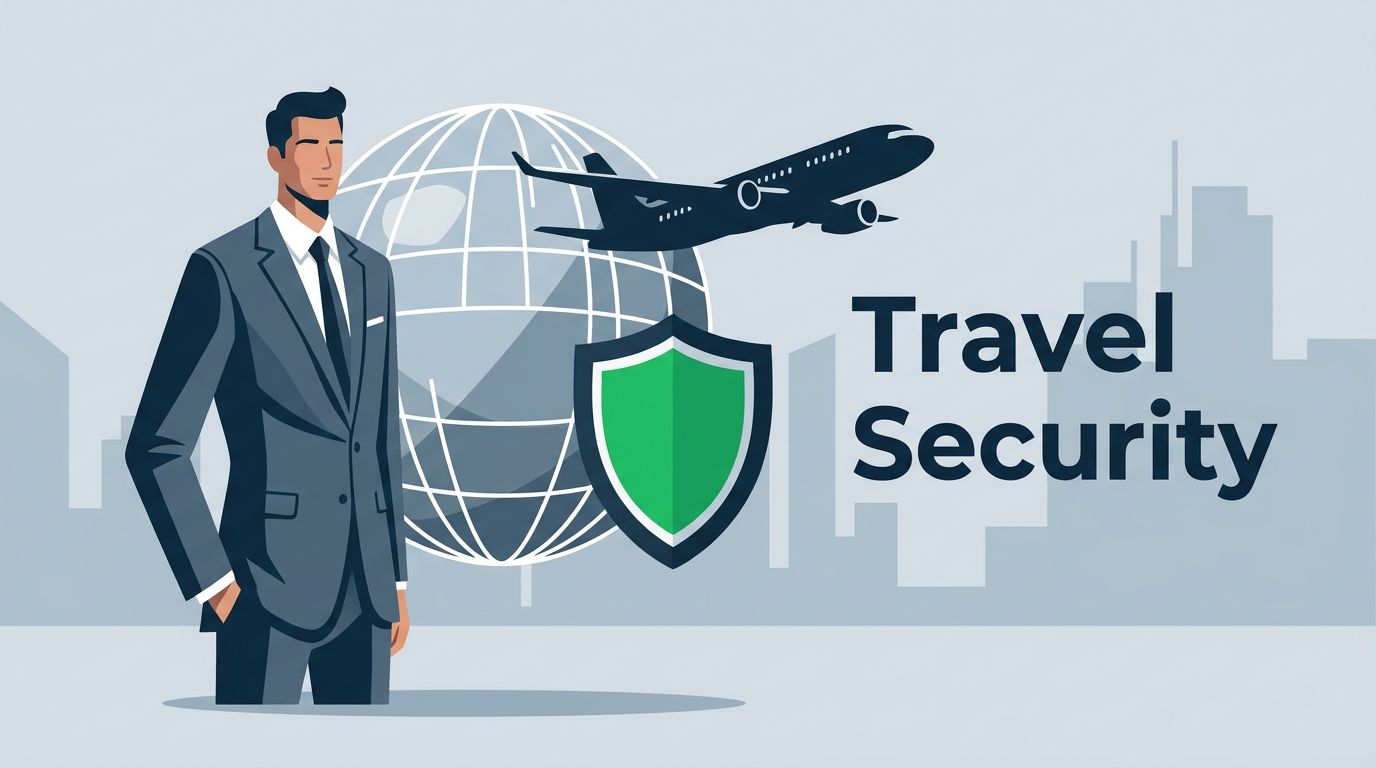
Executives face real dangers on business trips. Geopolitical tensions hit 80% of companies as their top worry in 2026. Add cyber threats and weather disruptions, and travel turns risky fast.
You manage security or travel. You know one incident can disrupt deals and damage reputations. These playbooks offer practical steps to protect leaders without slowing business.
Let’s start with the risks. Then build your plan step by step.
Spot Key Risks in Business Travel
Business travel exposes executives to threats most offices avoid. Crowds at airports hide pickpockets. Hotels face break-ins. Political unrest blocks roads.

In 2026, four in five travelers hit issues. Half dealt with emergencies. Geopolitical conflicts top the list. Europe sees 92% of firms concerned. Cyber attacks spike on the road because networks differ from home.
Consider a sales director in a tense city. Protests close her meeting venue. She misses the pitch. Or a CEO’s laptop gets hacked at a conference Wi-Fi. Data leaks follow.
Physical risks mix with digital ones. Deepfakes trick staff into bad decisions. Weather grounds flights, stranding teams.
Duty of care demands you assess these. Track frequent travelers. They face higher odds. Frequent U.S. trips raise visa flags too. Companies track days to avoid tax issues.
Build awareness first. Review past trips. Note patterns like delays or thefts. Use data to prioritize.
For deeper stats, check the ASIS 2025 Executive Protection Report. It shows most firms offer tracking but skip medical support.
Focus on prevention. Map risks by destination. Then plan ahead.
Create a Pre-Travel Planning Checklist
Advance work prevents most problems. Start 72 hours early for high-risk spots. Less leaves gaps.
Your checklist covers basics. First, gather intel. Check political stability, crime rates, health alerts. Tools like OSAC reports help.
Assign roles. Security leads. Travel managers book safe options. Executives share full itineraries.
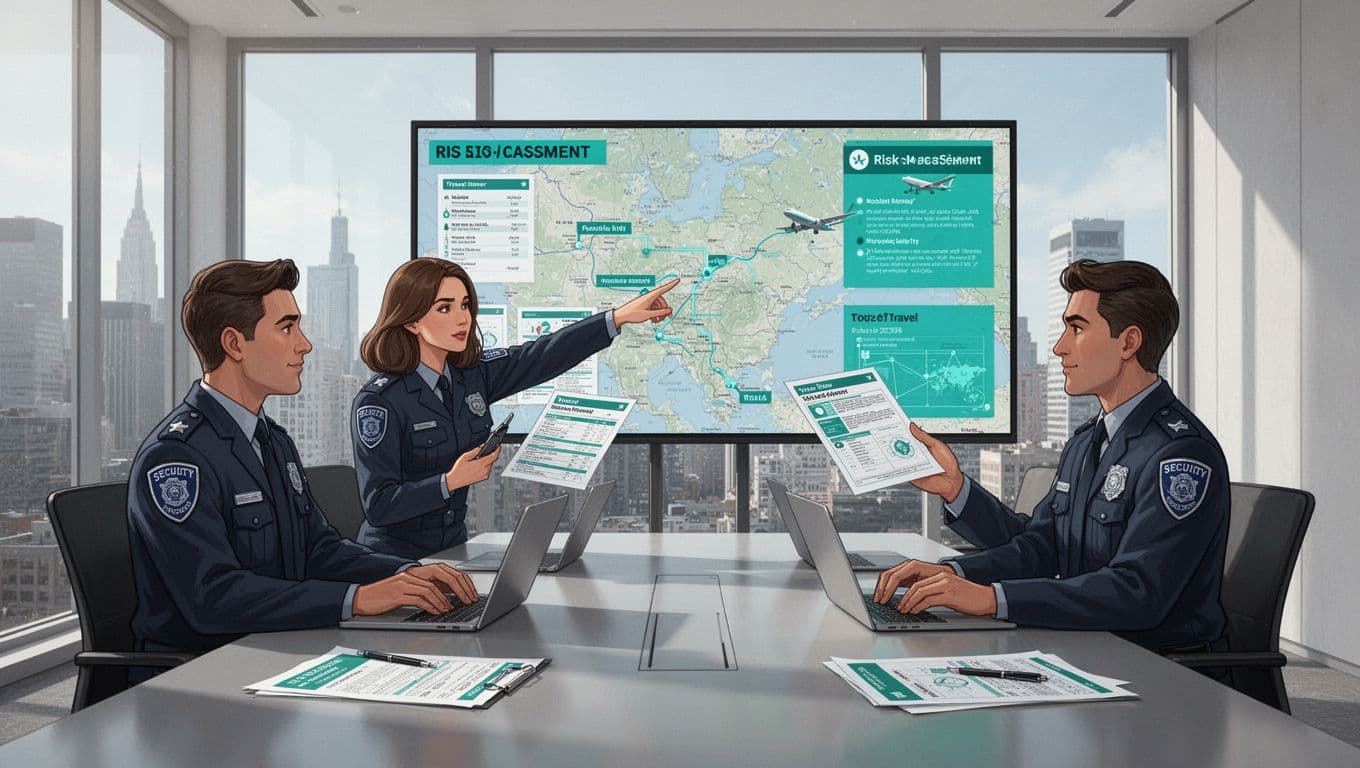
Example: An executive heads to Lagos. Advance team scouts routes. They flag traffic chokepoints like Lekki-Epe. Social media warns of protests.
Key steps include:
- Review destination threat levels.
- Confirm venues and hotels.
- Plan backups for flights and stays.
- Brief the executive on local laws.
Scale for your team. Small firms use apps. Big ones have global teams.
Privacy matters. Share only need-to-know details. Get consent for tracking.
Legal side: Check weapon laws. Some countries ban even pepper spray.
Test the plan. Run drills. What if a flight cancels?
This phase sets tone. Solid prep means smooth trips. AlertMedia outlines nine best practices that align here. They stress intel and coordination.
End with approvals. Everyone signs off. Then execute.
Use Tech for Real-Time Monitoring
Technology keeps eyes on executives without shadows. Tablets show locations. Alerts ping changes.
Pick tools that fit. AI platforms scan news and social for threats. They spot protests early.

Dataminr uses AI for event alerts. It pulls from posts and videos. Their executive protection page details it.
During a trip, real-time feeds matter. An executive in Europe gets weather warnings. Security reroutes.
Cyber tools protect too. VPNs secure connections. Multi-factor auth blocks hacks.
For lean teams, integrate with travel apps. They flag high-risk bookings.
Train users. Executives enable location sharing. But respect opt-outs.
Costs rise in 2026. 82% of firms worry. Start with basics like shared calendars. Add premium as needed.
Monitor quietly. No Big Brother feel. Focus on value.
Combine with human checks. Tech alerts. People respond.
Deploy On-the-Ground Protection Tactics
Once there, tactics keep things safe. Advance teams survey sites first.
They check hotels, venues, routes. Note exits, cameras, crowds.

Picture a conference in a risky area. Team arrives 48 hours early. They test drives. Meet local contacts.
Low-profile works best. No suits and earpieces. Blend in.
Transportation: Use armored cars only if needed. Taxis suffice elsewhere. Vary routes.
In meetings, position for quick exits. One guard nearby.
For solos, simple rules: Share live locations. Avoid night walks. Use ride apps with ratings.
Scale up for VIPs. Add teams. For solos, apps and check-ins.
Handle bleisure trips. Business cover ends at personal time. Remind staff.
Post-event debriefs improve next time. Note what worked.
Region Alert’s guide stresses 48-hour advances. It fits standard playbooks.
Stay adaptable. Conditions change fast.
Coordinate Teams and External Partners
Protection needs teamwork. Security, HR, travel managers align.
Set SOPs. Weekly calls for big trips. Daily texts for ongoing.
Vendors add scale. Hire local firms for overseas. Vet them hard.
Check licenses, references. Test communication.
Example: A C-suite trip to Asia. Your team plans. Locals handle ground.
Contracts spell duties. Response times. NDAs for privacy.
Ethics first. No overreach. Respect cultures.
For small ops, partner with platforms. They offer vetted pros.
Internal buy-in matters. Execs resist shadows. Sell benefits.
Track metrics. Incident rates drop with coordination.
Duty of care logs protect you legally. Document everything.
Build redundancy. What if a partner flakes?
Strong nets catch issues early.
Address Cyber Risks on the Road
Travel amps cyber exposure. Hotel Wi-Fi invites hacks. Phones hold secrets.
Pre-trip: Update devices. Use VPNs. Encrypt data.
Control Risks details traveler cyber tips. They push MFA and clean devices.
On site, avoid public chargers. Watch for shoulder surfers.
Deepfakes fool calls. Verify voices.
For execs, clean phones per trip. Wipe after.
Tie to physical. Lost bag means lost data.
Bud Consulting helps here. They vet cyber talent. Book a Discovery Call with Bud Consulting to strengthen your program.
Insurance covers breaches now. Pick policies that do.
Train often. Quiz staff on phishing.
Cyber joins physical in modern playbooks.
Navigate Legal and Ethical Boundaries
Laws vary. U.S. execs abroad face gun bans. Protection gear too.
Research per country. Use embassy sites.
Privacy laws like GDPR bind data. Get consents.
Ethics: Protect without spying. Track locations only with OK.
Duty of care: Firms must provide safety. Courts enforce it.
Sicuro Group’s report covers obligations.
Document choices. Audits follow incidents.
Balance business. Security enables trips, not blocks.
Consult lawyers for high-risk spots.
Stay current. Rules shift in 2026.
Key Takeaways for Your Playbook
Solid executive protection starts with prep. Risks like geopolitics and cyber demand checklists, tech, and teams.
You now have steps: Assess threats. Plan ahead. Monitor live. Coordinate well.
Implement one section at a time. Test on small trips. Scale up.
Protection supports business. Safe travels mean closed deals.
Your leaders count on you. Build the playbook today.