table of contents
Your connected device hits the market. It works great. Then a vulnerability surfaces. Customers worry. Investors ask questions. You scramble to patch it. Sound familiar? Hardware startups face this often because security feels like an afterthought amid tight budgets and fast timelines.
A solid hardware security roadmap changes that. It lets you build protection into products from day one without breaking the bank. You make tradeoffs that fit your stage, like focusing on secure boot before full compliance audits. This guide shows you how, with examples for IoT sensors and embedded systems.
Let’s start with your team.
Assembling Your Hardware Security Team
Startups can’t hire a full security department yet. You need a lean group that owns security across engineering and ops. Assign clear roles so no one drops the ball.
The CTO or lead embedded engineer often leads. They set priorities based on your product’s risks. Pull in one firmware developer for technical work. Add a product manager to track compliance deadlines. If budget allows, bring a consultant for threat modeling sessions.
For example, a smart thermostat startup might have the firmware engineer handle secure boot. The PM ensures OTA updates meet ETSI EN 303 645 basics. Outsource audits to experts.

This setup works because everyone contributes. The team meets weekly. They review progress against your roadmap. Tools like Jira track tasks.
Ownership matters. The firmware lead owns code signing. The PM owns vendor contracts for supply chain checks. Document this in a shared charter.
Hire part-time if needed. Platforms help find senior talent. Or book a discovery call with Bud Consulting to fill gaps fast.
Build trust by starting small. Run a security workshop first. It aligns the team on basics like unique device IDs.
Next, identify what threatens your hardware.
Prioritizing Security Threats in Hardware Products
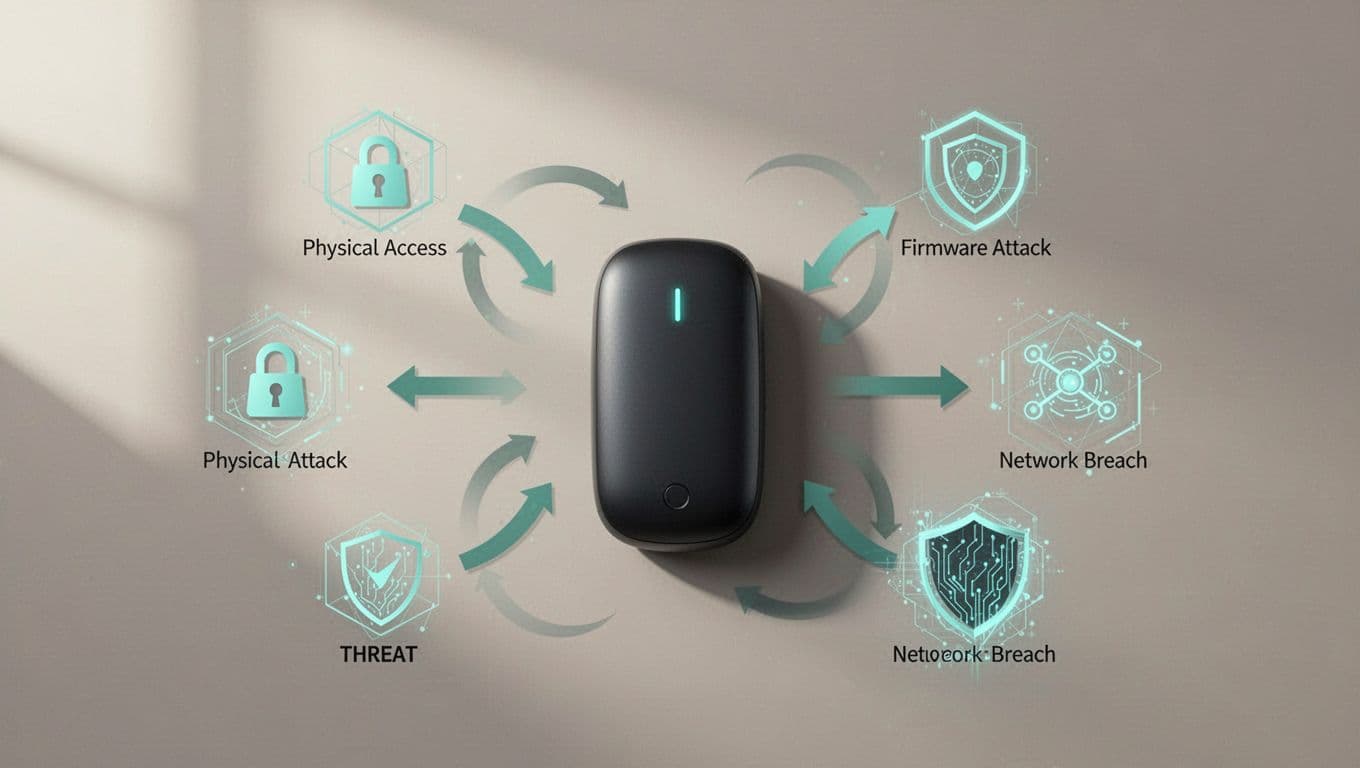
Threats hit hardware differently than software. Attackers target physical access, firmware, and networks. Prioritize based on your device.
Take an industrial IoT sensor. Physical tampering lets someone extract keys. Firmware attacks via USB inject malware. Network breaches steal data over MQTT.
Use threat modeling to sort these. List assets like encryption keys and user data. Ask: Who attacks? Why? How? Tools like STRIDE help: Spoofing, Tampering, etc.
For startups, focus top risks first. Secure boot blocks bad firmware. mTLS stops fake servers. Ignore rare side-channel attacks early.
Step one: Map your device. Draw components: MCU, radio, sensors. Note interfaces.
Step two: Brainstorm paths. Physical: JTAG ports. Remote: Weak TLS.
Step three: Score by likelihood and impact. High: Unpatched firmware. Low: Power analysis.
Document in a risk register. Update quarterly.
This keeps efforts focused. A medical wearable startup skipped full encryption at first. They prioritized unique certs because data leaks hurt most.
Standards guide you. MITRE’s EMB3D framework maps embedded threats well.
Review threats before design changes.
Core Technical Controls for Hardware Security
Pick controls that scale with your resources. Start with must-haves: secure boot, OTA updates, strong crypto.
Secure boot ensures only signed firmware runs. Your bootloader verifies each stage. Use hardware roots like TPM or secure elements.
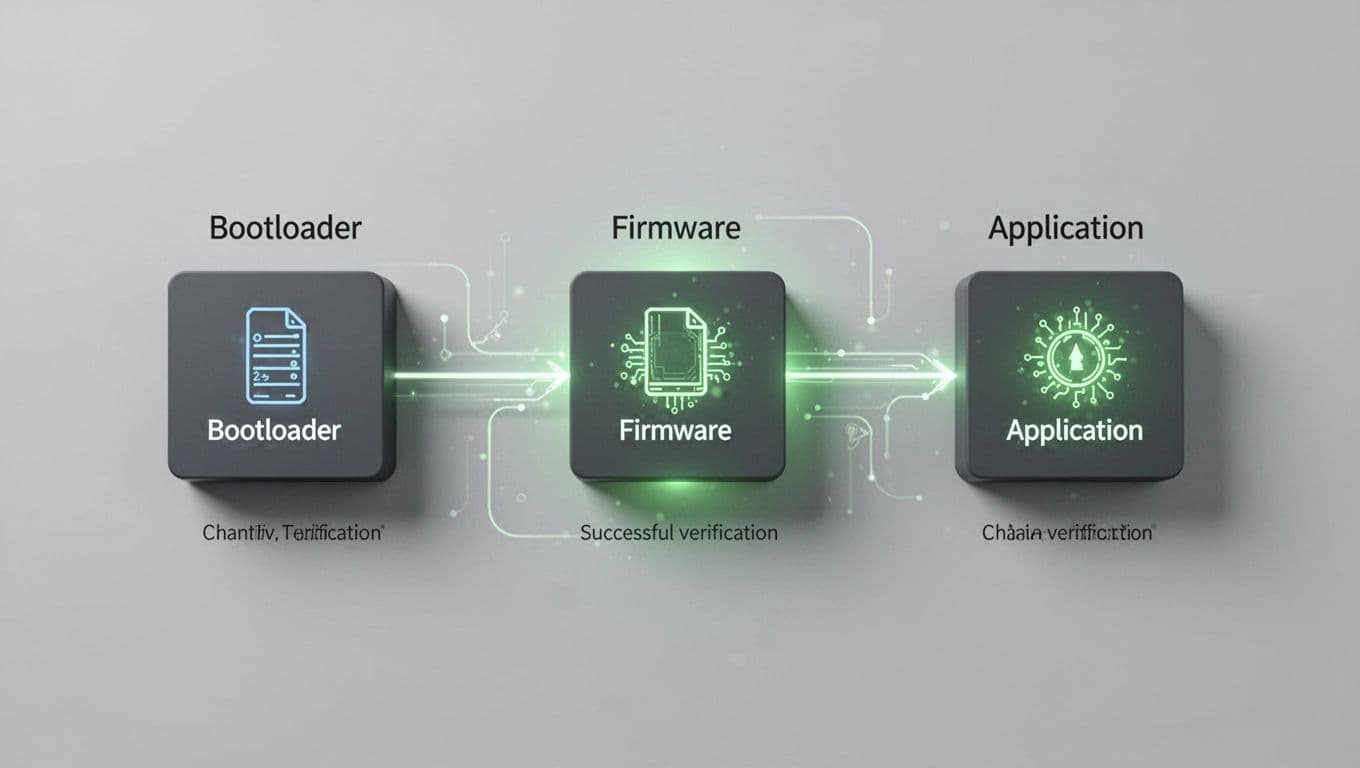
For an embedded gateway, implement like this:
- Generate root keys offline.
- Sign bootloader and app with them.
- Device checks signatures at boot. Reject fails.
Add anti-rollback. Block old versions.
OTA updates fix flaws post-ship. Use signed bundles over TLS 1.3. Stage rollouts: 10% first.
Crypto basics: AES-256 for data. ECDSA for signing. Store keys in secure enclaves.
Device identity: Unique X.509 certs per unit. Provision at factory. Rotate yearly.
For consumer electronics, add no-default-passwords. Force unique creds on setup.
Test these. Fuzz firmware. Run penetration tests.
TCG’s secure update guide details best practices.
Tradeoffs help. Skip mTLS if bandwidth limits devices. Use PSK instead.
These controls block 80% of attacks.
Navigating Regulations and Standards in 2026
Rules tightened by 2026. EU’s Cyber Resilience Act (CRA) hits all digital products. You must prove security-by-design. Report exploits in 24 hours. Plan updates for product life.
US Cyber Trust Mark labels secure consumer IoT. Meet NIST baselines for it.
Australia mandates standards from March 2026: No defaults, secure updates.
Align with frameworks. ETSI EN 303 645 for consumer: 13 provisions like encrypted comms. Download ETSI EN 303 645.
NIST IR 8259r1 guides manufacturers. Covers pre-market risk assessment to post-market support. Read the latest NIST IR 8259 revision.
Industrial? IEC 62443-4-2 for secure dev.
Startups comply smartly. Map requirements to your roadmap. Audit annually.
For a connected medical device, hit ISO 27400 for privacy too.
Non-compliance blocks sales. EU fines reach 15 million euros.
Use checklists from NIST’s IoT core baseline.
Stay current. Regulations evolve.
Securing Your Supply Chain
Hardware risks start upstream. Fake chips or tampered firmware kill security.
Vet suppliers. Source from authorized distributors. Check for counterfeits with X-rays or decaps.
Protect firmware in production. Program chips at secure sites. Use HSMs for key injection. Ship blanks to assemblers.
Contracts matter. Require SOC 2 from CMs. Audit facilities.
For embedded systems, obscure sensitive pins. Add tamper seals.
This supply chain playbook covers verification steps.
Track components with SBOMs. Tools generate them from BOMs.
A robotics startup lost prototypes to insider theft. They added RFID and NDAs after.
Start small: Qualify top five suppliers first.
Sample 12-Month Hardware Security Roadmap
Tie it together in phases. Adjust for your stage.
Months 1-3: Assess. Threat model your MVP. Build team. Pick secure MCU.
Months 4-6: Design. Implement secure boot. Add TLS. Provision certs.
Months 7-9: Implement. Test OTA. Run pen tests. Document for CRA.
Months 10-12: Monitor. Roll out updates. Audit compliance. Plan support.
Assign owners: Firmware lead for boot, PM for docs.
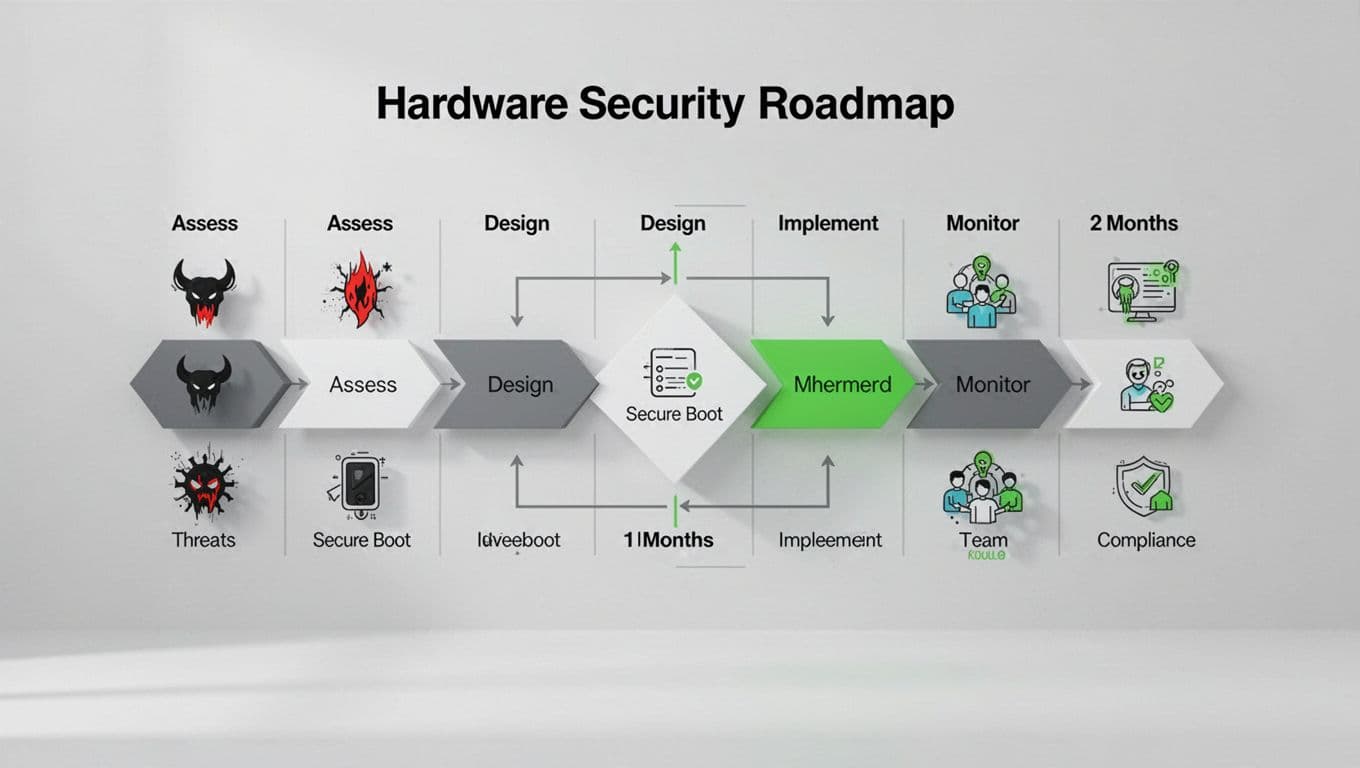
Track milestones. Budget 10-15% of engineering for security.
Example for fitness tracker: Month 2 closes JTAG. Month 5 adds unique IDs. Month 11 certifies ETSI.
Review quarterly. Adjust for new threats.
This roadmap scales. Seed stage skips audits; Series A adds them.
Inovasense hardware guide matches this flow.
Conclusion
A hardware security roadmap protects your startup without overwhelming resources. You prioritize threats, build core controls, and hit key standards like NIST IR 8259 and EU CRA.
Focus on tradeoffs. Secure boot and OTA first. They block most risks.
Your devices ship safer. Customers trust you. Growth follows.
Act now. Map threats this week. Your future self thanks you.