table of contents
You’re building a security team that spots threats early. Attackers move fast in cloud setups and identity-heavy environments. A deception operations engineer sets traps that catch them before damage hits.
These pros create fake assets. They lure intruders into decoys while feeding data to your SIEM or SOAR. You get alerts on real tactics, not just signatures. In 2026, with AI attacks rising, this role fills a gap in proactive defense.
This guide walks you through spotting talent, screening them, and avoiding pitfalls. You’ll end up with someone who boosts your purple team efforts.
What a Deception Operations Engineer Does Today
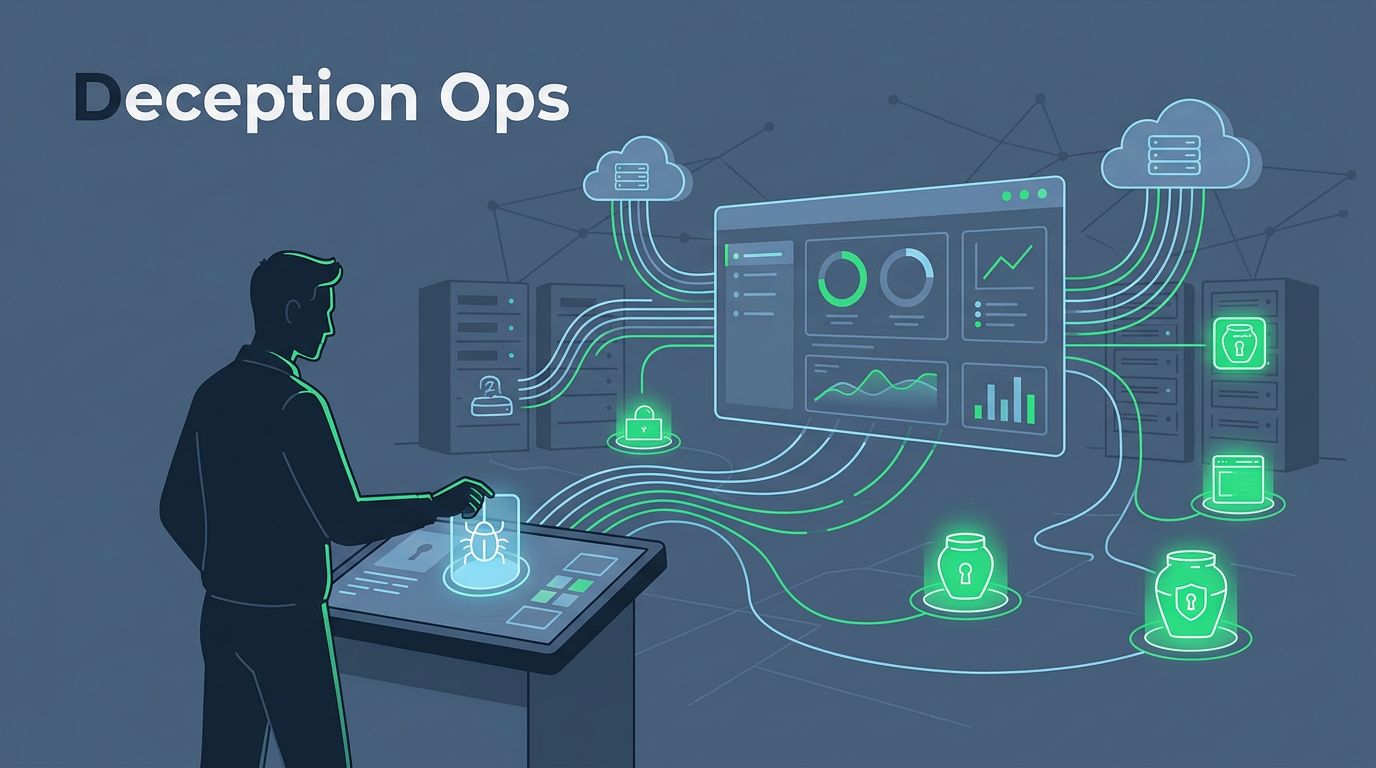
Deception operations engineers deploy decoys that mimic real systems. They build honeypots for cloud services like AWS or Azure. Attackers chase fake credentials or servers, and sensors capture every move.
These engineers integrate traps with tools like Splunk or Cortex XSOAR. When a decoy triggers, data flows into your stack for automated responses. They also tune lures based on threat intel, making them look like high-value targets.
In practice, they emulate adversary paths. Think lateral movement via SMB or RDP. Engineers test these in purple team exercises to measure dwell time cuts.

Current trends show AI driving dynamic decoys. Platforms like Zscaler’s Deception shift assets in real time. This matches attacker behavior, gathering better telemetry. Engineers also handle identity deception, faking Active Directory objects to spot privilege escalations.
They track outcomes with metrics. Dwell time drops 50% in mature setups. False positives stay low because interactions confirm intent. Plus, they collaborate on threat hunting, turning decoy logs into hunt pivots.
Expect hands-on work with containers and VMs for scalable traps. They script deployments in Python or Go, often using Ansible for orchestration.
Why Your Team Needs One in 2026
Attacks surged 30% last year. AI malware evades traditional tools. Deception gives early warnings, often before EDR pings.
Cloud breaches hit identity first. Fake IAM roles or service accounts detect enumeration. This fits zero-trust models perfectly.
Market growth hits $3.36 billion this year. Tools like SentinelOne’s Falcon integrate deception natively. Yet, skilled operators remain scarce.
Hiring one strengthens SOC maturity. They bridge detection and response. Purple teams use their setups for realistic simulations.
In sectors like finance or healthcare, regulations push active defenses. Deception proves compliance through logged diversions.
Key Skills and Competencies to Look For
Look for blends of detection engineering and threat hunting. Few carry the exact title, so scan resumes for adversary emulation or honeypot experience.
Core tech skills include Linux and Windows internals. They need Active Directory mastery for credential lures. Network protocol knowledge covers SMB, RDP, and Kerberos.
Scripting is non-negotiable. Python for sensor logic, Bash for deploys. Cloud certs like AWS Security help with multi-cloud traps.

Integration savvy matters. They wire decoys to SIEMs via syslog or APIs. SOAR playbooks trigger on alerts. Familiarity with platforms like Attivo or TrapX speeds onboarding.
Soft skills count too. They explain telemetry to analysts. Purple team work demands collaboration with red teams.
Prioritize MITRE ATT&CK fluency. Candidates should map lures to tactics like T1078 (valid accounts).
Check for measurable wins. Did their traps cut mean time to detect? Real examples beat certs.
Sample Job Description Elements That Attract Top Talent
Start with a clear role summary. “Join our SOC to build and operate deception grids that divert attackers in hybrid cloud environments.”
List duties:
- Deploy and maintain decoy assets across endpoints, networks, and identities.
- Analyze interactions to enrich threat intel.
- Integrate with SIEM/SOAR for automated alerts.
- Run purple team tests to validate efficacy.
Required skills mirror the competencies above. Add “3+ years in detection engineering or threat emulation.”
Perks draw candidates. Mention remote options, equity, and conference budgets. Highlight impact: “Reduce breach risks with tools that outsmart AI threats.”
For inspiration, see this Greynoise Deception Engineer posting. It emphasizes sensor prototyping.
Tailor to your stack. If you use CrowdStrike, note it.
Your Screening Checklist for Resumes and Calls
Filter fast with a 10-point checklist. Score candidates 1-5 per item.
| Criterion | What to Check |
|---|---|
| Deception tool experience | Mentions of honeypots, Canarytokens, or commercial platforms. |
| Cloud/identity work | AWS IAM, Entra ID, or Okta deploys. |
| Integration history | SIEM feeds or SOAR playbooks built. |
| Scripting samples | GitHub links to automation code. |
| ATT&CK mapping | Examples tied to specific techniques. |
| Metrics shared | Dwell time reductions or alert volumes. |
| Purple team exposure | Joint exercises with hunters. |
| Recent projects | 2025+ work with AI-driven traps. |
| Certs | GCDE, OSCE, or cloud security. |
| Cultural fit | Team collaboration stories. |
Top scorers advance. Initial calls probe one deep example: “Walk me through a decoy you built.”
This cuts noise. Aim for 5-10 interviews max.
Interview Questions That Reveal True Expertise
Probe beyond buzzwords. Use behavioral and technical probes.
Start broad: “Describe a deception grid you operated. What tools did you pick and why?”
Test design: “How would you lure an attacker post-compromise in a cloud setup? Cover identity and lateral moves.”
Integration focus: “Build a SOAR playbook for a decoy alert. What fields trigger isolation?”
Hands-on: Share a network diagram. “Add three lures here. Justify placements.”
Trends: “How does AI change decoy strategies? Give an example.”
Purple team: “How do you measure deception ROI in exercises?”

Follow up: “What failed in past setups? How did you fix it?”
Live coding: Script a simple breadcrumb in Python. Or map an ATT&CK chain to lures.
These reveal builders from talkers. For more ideas, check this LinkedIn overview of deception roles.
Compensation Considerations for 2026
Base pay ranges $130,000 to $170,000 in the US. Factors include location and experience. Senior roles with clearances hit higher.
Total comp adds 20-30% in bonuses and equity. Cyber firms offer RSUs that vest over four years.
Benefits seal deals. 401k match, unlimited PTO, and learning stipends. Remote work is standard.
Benchmark against ops engineers at $113,000 average base. Deception niches command premiums.
Retain with growth paths. Promote to lead deception ops after two years.
Common Hiring Mistakes to Avoid
Don’t chase exact titles. Great fits come from detection or red team backgrounds.
Skip juniors for this. They lack emulation depth.
Overlook metrics. Ask for proof, not promises.
Ignore culture. Solo operators flop in team SOCs.
Rush without purple team trials. Test their traps onsite.
Finally, undervalue integrations. If they can’t wire to your SIEM, pass.
Conclusion
Hire a deception operations engineer to turn defense into misdirection. They deliver early detections and intel that pays off in shorter breaches.
Focus on blended skills, rigorous screens, and real tests. You’ll build capabilities that scale with 2026 threats.
Ready to fill this gap? Book a Discovery Call with Bud Consulting for tailored sourcing.
(Word count: 1487)