table of contents
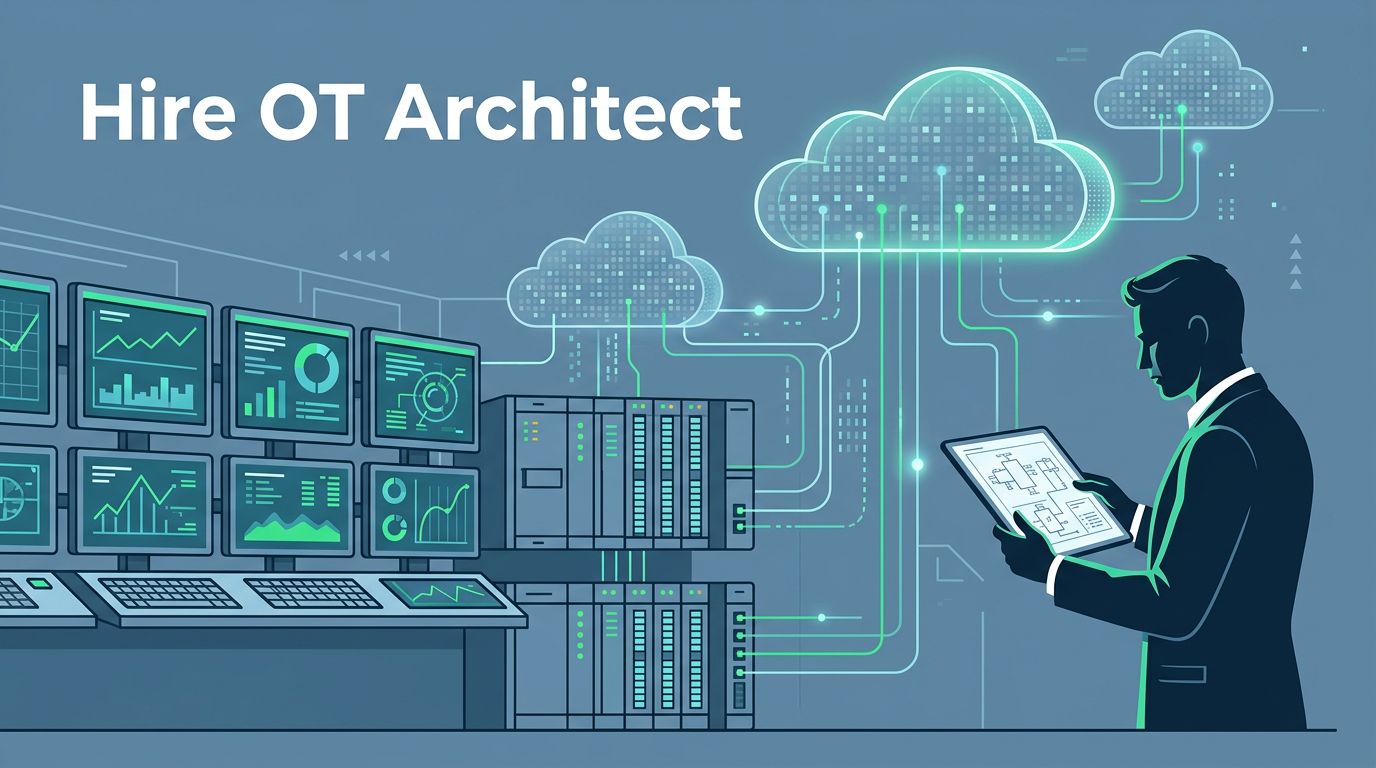
Ransomware hit OT systems hard this year. Factories shut down. Power grids flickered. You know the stakes. As a CISO or operations exec in manufacturing or energy, you need a principal OT security architect who can build defenses that last.
Threats evolve fast in 2026. Legacy ICS gear mixes with cloud edges. Attackers target both. A strong hire spots risks before they disrupt production.
This guide walks you through the process. You’ll define the role, find candidates, interview smart, and set them up to win.
Understand the Role of a Principal OT Security Architect
A principal OT security architect designs secure systems for industrial control environments. They bridge IT and OT worlds. Think SCADA networks, PLCs, and Purdue model zones.
These pros lead architecture efforts. They segment networks to block lateral movement. They align defenses with NIST 800-82 or IEC 62443 standards. Daily work involves threat modeling for historians, HMIs, and engineering workstations.
Expect them to own governance too. They advise on Zero Trust for OT. They push for asset inventories that cover every sensor and valve actuator. In 2026, they handle AI-assisted threats that adapt on the fly.

This role demands cross-functional work. They partner with plant engineers to avoid downtime. They brief executives on risks tied to physical outcomes, like pump failures.
National Grid’s Principal OT/IT Security Architect posting shows real duties. Candidates there manage convergence risks in utilities.
Your architect influences policy. They select tools like next-gen firewalls tuned for Modbus traffic. They ensure compliance amid rising regs like CISA mandates.
Hiring one pays off. They cut breach costs by focusing on high-impact controls first.
Navigate the 2026 OT Threat Landscape
OT faces AI-driven malware now. It scans networks solo and picks targets. Ransomware tops lists, with groups mapping control loops for sabotage.
Dragos reports show 26 OT-focused actors active. They hit manufacturing hardest. Attacks on Modbus rose 84% last year. Many start in IT, then pivot to OT.
Iran-linked groups exploit internet-facing PLCs. They tweak configs for false readings. Water plants saw disruptions this spring.

Legacy flaws persist. BAS controllers lack patches. Siemens gear shows auth bypasses. Visibility lags; 70% of networks miss east-west traffic.
Oil and gas ops report 99% hit by incidents since winter. IT compromises bleed into OT 96% of the time. Check TXOne Networks’ analysis for details.
Your hire must counter this. They prioritize perimeter hardening and protocol monitoring. They plan for unpatchable gear through isolation.
Geopolitics amps risks. State actors test grids. Supply chains add XIoT weak spots. A principal architect builds resilience here.
Define Key Skills and Qualifications
Look for 10+ years in OT security first. They need hands-on ICS experience. Modbus, DNP3, OPC UA fluency is table stakes.
Technical chops include Purdue segmentation and encryption for fieldbus. They know anomaly detection for PLC logic changes.
Certifications help. CISSP pairs with GICSP or ISA/IEC 62443. AWS OT Specialty shows cloud convergence skills.
Soft skills matter. They translate risks to ops teams. Leadership means mentoring juniors and driving roadmaps.
From Oak Ridge Lab’s Principal OT/ICS Engineer role, expect threat hunting in live environments.
Screen for Python or PowerShell use. They script for automation, like asset discovery.
| Skill Category | Must-Haves | Nice-to-Haves |
|---|---|---|
| Protocols | Modbus, DNP3, IEC 61850 | Profibus, HART |
| Frameworks | NIST 800-82, IEC 62443 | TOGAF for OT |
| Tools | Dragos, Nozomi, Claroty | Custom SIEM rules |
This table flags gaps fast. Test with scenarios, like defending a breached RTU.
Demand surges 32% through 2028. Industrial sectors hire for uptime protection.
Write a Job Description That Attracts Stars
Start with impact. “Lead OT defenses against 2026 ransomware waves.” List duties: design segmented architectures, conduct risk assessments.
Specify environment. Mention ICS types in your ops, like DCS or batch systems.
Perfomynd’s OT Security Architect guide nails it. They stress resilience in high-uptime sites.
Include must-haves: 10 years OT, protocol depth, compliance wins. Add prefs like DevSecOps for IIoT.
Set remote/hybrid clear. Many want 2-3 days onsite for air-gapped labs.
End with culture fit. “Join a team that values plant-floor realities.”
Post on LinkedIn, ClearanceJobs, and niche boards. Tailor for CISSP holders.
Source Candidates Where They Hide
Talent pools shrink. Target ex-utility engineers turned OT pros.
Use recruiters like Bud Consulting. They know ICS vets from Dragos or Claroty alumni.
LinkedIn searches: “OT security architect” + “SCADA” + “IEC 62443”. Filter 10+ years.
Conferences yield gold. S4, ICS Cyber yield leads. Post-event, message speakers.
Internal moves work. Promote senior analysts with field exposure.
Contract-to-hire tests fit. Hire for a segmentation project first.
Book a Discovery Call with Bud Consulting to tap vetted networks.
Aim for 20-30 resumes. Quality beats volume.
Master the Interview Process
Screen resumes for OT proof. Ask for Purdue diagrams they’ve built.
Phone round: “Walk me through segmenting a Level 1 PLC from IT.” Probe real breaches.
Panel interviews mix tech and execs. Use behavioral questions.

Tech deep dive: Simulate threats. “An attacker pivots via historian. Your response?”
Ops fit: “How do you balance security with 99.99% uptime?”
Reference checks: Call past bosses. Ask about downtime incidents led.
Scorecard example:
- OT Experience: 1-5
- Threat Modeling: 1-5
- Leadership: 1-5
Top score? Advance. Four rounds max.
Set Competitive Compensation
Base salaries hit $180k-$250k. Total comp $250k-$320k with bonuses, stock.
San Jose tops $350k. Midwest averages $200k total.
Comparably pegs principal security architects at $178k average, but OT premiums add 10-20%.
Equity vests over 4 years. Sign-on $30k common.
Benefits: 4 weeks PTO, OT-specific training budgets.
Benchmark peers. Offer 10% above market for speed.
Negotiate perks like home lab stipends.
Onboard for Quick Wins
Day one: Access and desk. Pair with a buddy for plant tours.
Week one: Asset inventory review. Joint threat hunt.

Month one: Roadmap draft. Quick wins like VPN hardening.
Tools access: Claroty, Nessus for OT. Cert renewals funded.
Check-ins weekly. Measure by risk score drops.
Smooth starts boost retention 50%.
Dodge Common Hiring Pitfalls
Don’t hire IT architects sans OT time. They miss protocol quirks.
Skip generic postings. Tailor or get floods of mismatches.
Rush interviews. One bad hire costs $300k in disruptions.
Ignore culture. Plant-floor respect trumps certs.
Overlook remote risks. Test their hybrid setup security.
Follow trends. AI threats demand fresh skills.
Key Takeaways
Hire a principal OT security architect to shield your ops from 2026 threats. Focus on OT depth, interview rigor, and fast onboarding.
You’ll gain segmented networks and proactive defenses. Production stays online.
Start defining needs today. The right hire turns risks into strengths.