table of contents
Cyber risks hit hard these days. A single breach can cost millions, yet most teams still rely on gut feelings or color-coded charts to gauge threats. You need numbers that tie directly to business impact.
That’s where a risk quantification analyst comes in. This person turns vague worries into dollar figures, so you can prioritize fixes and justify budgets. They help CISOs and leaders speak the language of the boardroom.
This guide walks you through the process. You’ll learn what to look for, how to spot real talent, and pitfalls to dodge. Let’s get started.
Understand What a Risk Quantification Analyst Does
Risk quantification analysts measure cyber threats in financial terms. They estimate how often bad events happen and how much they cost. This work shifts your security program from reactive to strategic.
Picture this: Your team faces a phishing wave. A regular analyst flags it as “high risk.” The quant analyst crunches data to show it could lead to $2 million in losses over a year. Now you have a clear case for training or tools.
Their main outcomes include loss scenario analysis and risk reporting. They build models for breaches, downtime, or regulatory fines. These feed into decisions on insurance, controls, or vendor choices.
Daily tasks involve data gathering from logs, threat intel, and finance teams. They run simulations to test “what if” scenarios. Results go into dashboards that executives trust.

In cybersecurity, they focus on third-party risks or cloud exposures too. For example, they might quantify supply chain attacks. This helps you allocate resources where they matter most.
Expect them to collaborate across departments. They don’t just analyze; they advise on mitigation. A good hire delivers reports that drive action, not dust on a shelf.
Key Skills and Experience to Prioritize
Start with proven quant skills. Look for backgrounds in stats, finance, or data science. Many come from actuarial roles or cyber insurance.
Hands-on experience beats degrees every time. Seek 3-5 years in risk modeling. They should have tackled real cyber incidents, like ransomware costs.
Strong communicators stand out. They explain complex models to non-tech folks. Ask for examples of board presentations during screening.
Data savvy is non-negotiable. They pull from SIEM tools, vulnerability scanners, and ERP systems. Proficiency in Python or R for scripting helps automate workflows.
Soft skills matter too. Curiosity drives better estimates. Resilience handles pushback from skeptics who prefer old-school methods.
For enterprise risk, experience with third-party assessments adds value. They map vendor weaknesses to your bottom line.
Tailor to your needs. A startup might want a generalist. Larger firms seek FAIR experts for compliance-heavy environments.
Master the Frameworks They Use
Frameworks give structure to their work. The FAIR model tops the list. It breaks risk into loss event frequency and magnitude.
FAIR stands for Factor Analysis of Information Risk. Analysts use it to quantify threats, vulnerabilities, and impacts. Download the standard from the FAIR Institute for details.
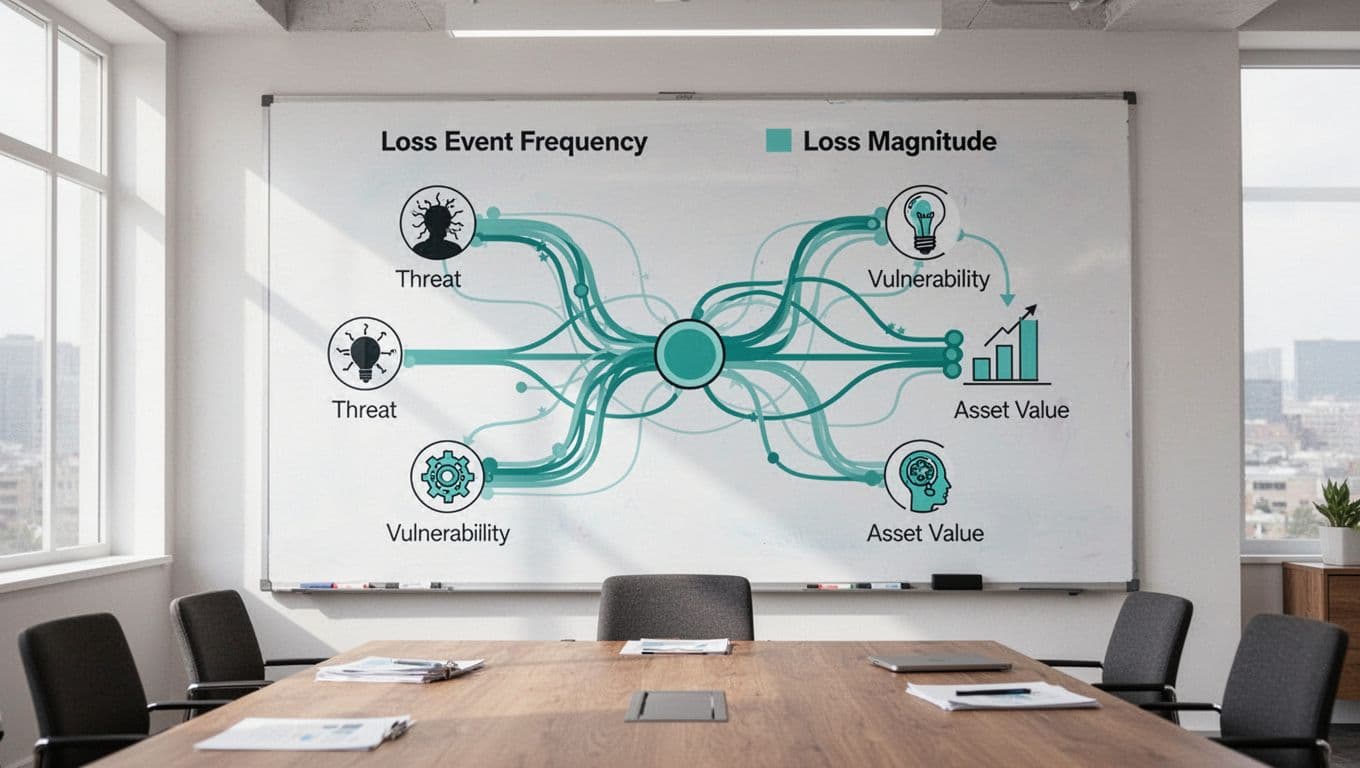
Monte Carlo simulation comes next. It runs thousands of scenarios to predict loss ranges. Useful for uncertain events like zero-days.
Loss scenario analysis builds specific stories. “What if our SaaS vendor gets hacked?” They assign probabilities and costs.
Risk reporting ties it together. Outputs include heat maps with financial scales or scenario priors for audits.
Not all know every tool. Prioritize FAIR certification. It signals depth. Check the FAIR Institute’s why-FAIR page for basics.
These methods align security with business goals. Your hire should adapt them to your industry, like finance or healthcare.
Tools and Data Experience That Count
Tools speed up analysis. Excel works for starters, but pros use specialized software.
RiskLens or Palisade @RISK handle Monte Carlo runs. They integrate FAIR ontologies for consistency.
Open-source options like R packages suit budget teams. Python libraries such as NumPy and SciPy crunch big data.
Data sources vary. Threat intel from MITRE ATT&CK or Verizon DBIR feeds models. Internal breach history refines estimates.
Look for GRC platform experience, like ServiceNow or Archer. They pull risks into unified views.
Automation matters. Scripts that query APIs for vuln data save hours.
Test this in interviews. Ask them to walk through a tool demo. Real users spot gaps fast.
Set Realistic Salary Expectations and Team Structure
Pay reflects demand. In US cybersecurity, expect $140,000 to $155,000 base for mid-level roles in 2026. Bonuses add 20-30%.
General quant risk analysts average lower, around $100,000 per PayScale data. Cyber specialists command premiums due to scarcity.
Location bumps numbers. San Francisco pays 20-30% more. Remote roles hover near national averages.
Team fit shapes offers. A solo hire needs broad skills. In a risk team, pair with qualitative experts.
Structure wisely. Report to CISO or CRO. Give access to finance for credible models.
Benefits like cert reimbursements retain talent. Total comp hits $180,000+ for seniors.
Benchmark with Glassdoor cyber risk salaries too.
Avoid These Common Hiring Mistakes
Rushing the process tops the list. Skip deep vetting, and you get flashy resumes without substance.
Overvaluing certs alone fails. CISSP helps, but FAIR hands-on wins.
Ignoring culture fit hurts. Quants must bridge tech and business. Test collaboration early.
Lowballing pay loses candidates. Demand outstrips supply; match market rates.
Forgetting outcomes. Hire for models that change decisions, not just reports.
The FAIR Institute’s hiring guide flags similar traps. Learn from them.
Run Effective Interviews
Screen resumes for keywords like FAIR, Monte Carlo, or loss exposure. Phone chats gauge communication.
Technical rounds test core skills. Use case studies: “Quantify phishing risk for our 5,000 users.”
Ask behavioral questions. “Describe a time your analysis shifted priorities.” Probe data sources and assumptions.
Live demos shine. Give a dataset; have them build a quick model. Watch for transparency on uncertainties.
Panel interviews include stakeholders. Finance tests business acumen; peers check teamwork.

Here’s a practical checklist:
- Review portfolio of past analyses.
- Walk through a FAIR scenario.
- Simulate Monte Carlo with sample data.
- Discuss handling biased data.
- Present findings to a mock executive.
Close with fit questions. “How do you stay current?”
This process uncovers true capability.
Key Takeaways
Hiring a risk quantification analyst transforms how you handle cyber threats. Focus on outcomes like financial models that guide real decisions. Prioritize FAIR expertise, data skills, and clear communication.
Build a team where they thrive, with fair pay around $140,000-$155,000. Use structured interviews and avoid rushing.
The right hire quantifies risks that matter. Your security program gains credibility overnight.
Need help sourcing talent? Book a Discovery Call with Bud Consulting to fill this role fast.