table of contents
Hybrid cloud setups promise flexibility. You keep sensitive data on-premises while scaling workloads in public clouds. Yet attackers exploit the gaps between these environments. Breaches cost $4.44 million on average, but full visibility cuts that by nearly $2 million.
Security teams drown in alerts from on-prem servers, AWS instances, Azure VMs, and Kubernetes pods. Hybrid cloud exposure prioritization helps focus on real risks. It correlates vulnerabilities, misconfigurations, privileges, and attack paths.
This article breaks down practical frameworks. You’ll get components, a scoring model, and steps to adapt them in 2026.
Why Hybrid Clouds Complicate Exposure Management
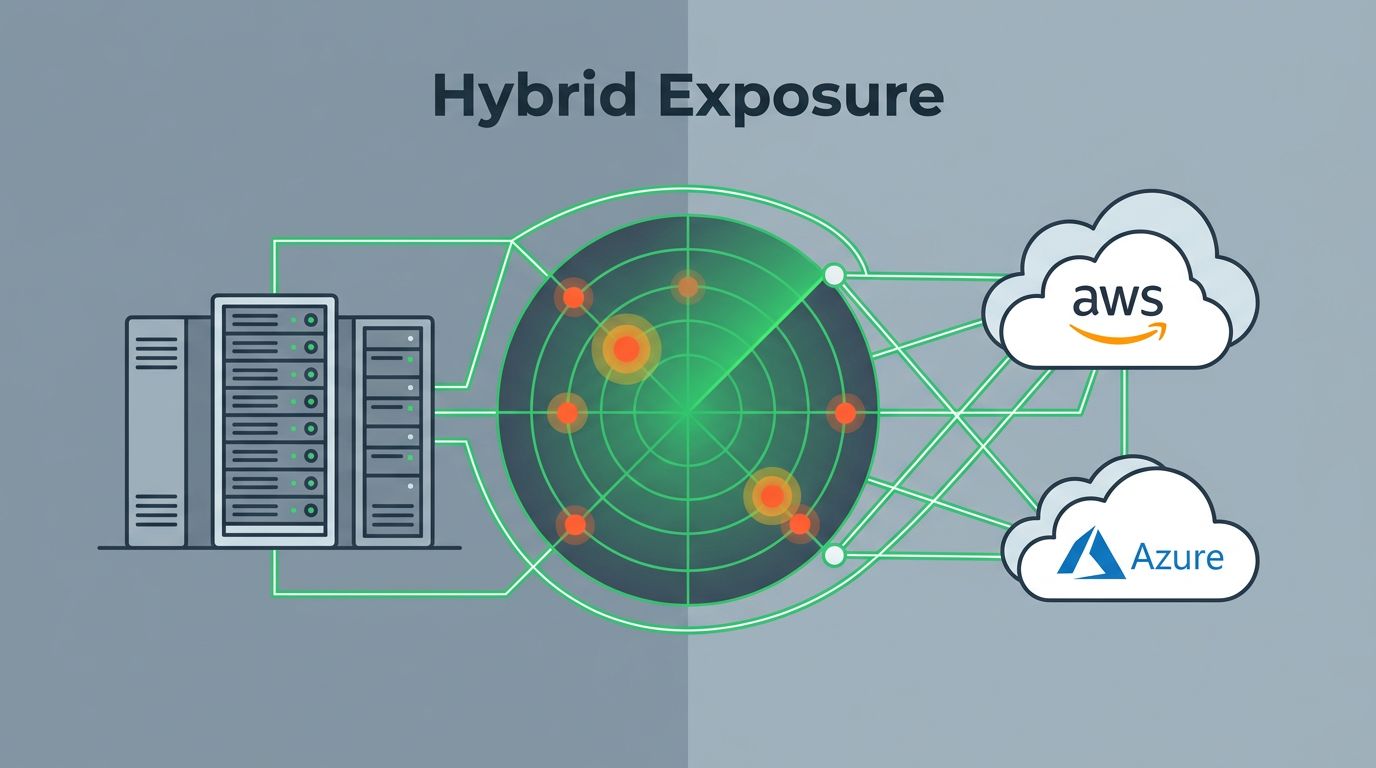
Hybrid environments mix on-premises data centers with public clouds. This creates blind spots. Teams struggle with fragmented visibility across AWS, Azure, and legacy systems.
Asset inventories stay inconsistent. Ephemeral workloads spin up and down in Kubernetes clusters. You scan today, but tomorrow’s pods evade detection. Identity sprawl adds chaos. Users hold excessive privileges that span clouds and on-prem.
Attackers chain these issues. A misconfigured S3 bucket leads to lateral movement via over-permissive IAM roles. Then they hit your crown-jewel database.
In 2026, 87% of enterprises run multi-cloud workloads. Yet most use over 35 security tools. This scatters data and delays response.
Consider a finance firm. It stores customer records on-prem but processes trades in the cloud. A single overlooked API exposure bridges the gap. Without prioritization, teams chase CVSS scores that ignore business context.
Zero trust helps, but you need more. Frameworks rank exposures by exploitability and impact. They cut noise so SecOps acts on threats that matter.

Visibility gaps show in gray areas here. Secure links use green accents.
Key Components of Effective Frameworks
Strong frameworks start with discovery. You map all assets, from VMs to containers. Tools ingest data from cloud APIs and agents.
Next comes vulnerability assessment. Scan for CVEs, but weigh them against active exploits. Threat intelligence feeds in real-time data on attacker tactics.
Identity analysis checks privileges. Look for standing access that violates least privilege. Just-in-time access reduces sprawl.
Attack path mapping simulates breaches. It traces routes from internet-facing assets to critical systems. Choke points emerge, like a single misconfig enabling multiple paths.
A scoring engine combines factors. It outputs priorities your team trusts.
These components form a pipeline. Data flows from left to right, refining risks at each step.
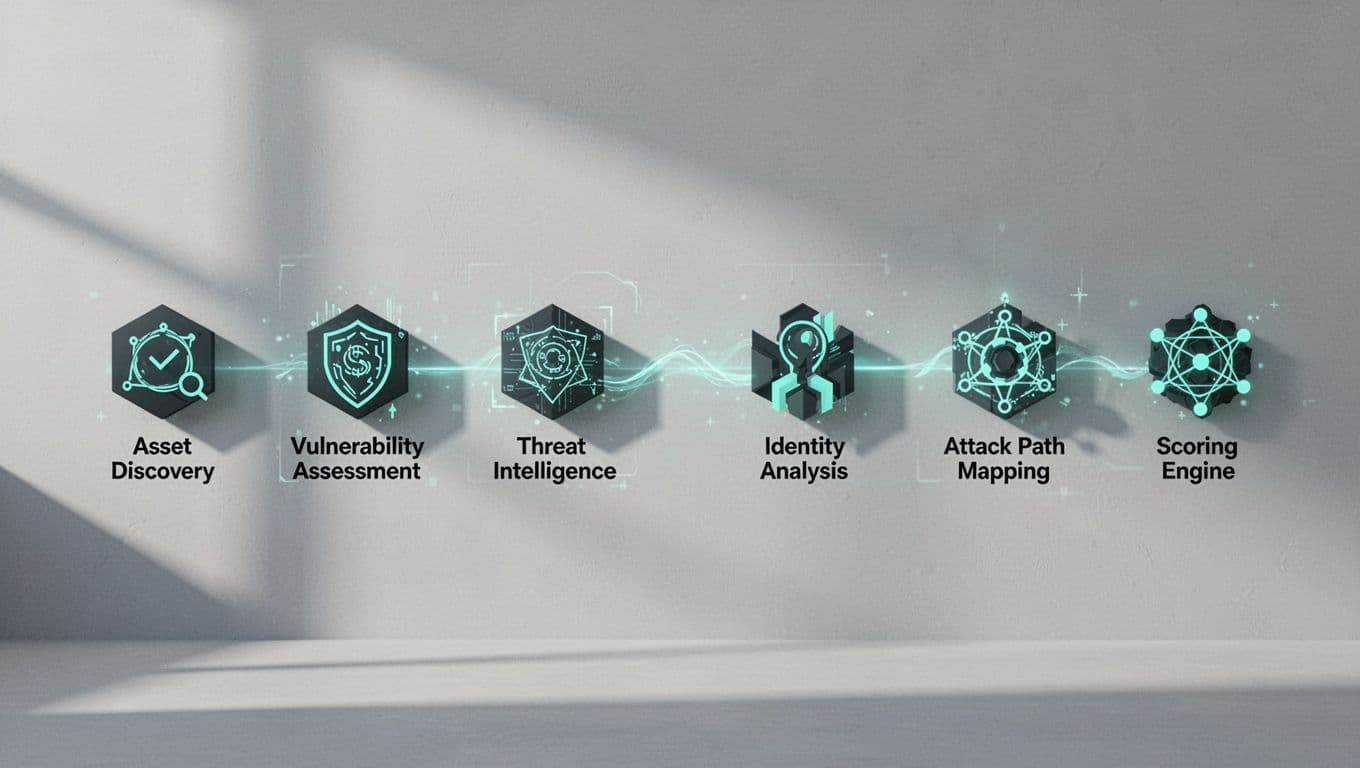
This pipeline visualizes the flow. Each icon represents one step.
For example, XM Cyber’s platform maps paths across on-prem and cloud. It prioritizes choke points that protect many assets. Their approach to attack path management offers a model.
Tenable correlates exploitability with business impact. Their cloud risk prioritization uses AI-driven ratings.
Build yours vendor-neutral. Integrate open APIs for flexibility.
Building a Hybrid Cloud Exposure Scoring Model
Scoring turns data into action. Start with axes: exploitability and business impact.
Exploitability factors include CVE age, proof-of-concept code, and threat actor use. Business impact weighs asset criticality, data sensitivity, and downtime costs.
Assign weights. For instance, exploitability gets 40%, impact 30%, identity risk 20%, path reachability 10%.
Create a matrix. Quadrants guide triage.
| Factor | Low Score Example | High Score Example | Weight |
|---|---|---|---|
| Exploitability | No public exploit, old CVE | Active ransomware use, recent PoC | 40% |
| Business Impact | Test VM, no PII | Customer DB, revenue app | 30% |
| Identity Risk | Least privilege enforced | Service account with cluster admin | 20% |
| Attack Path | Isolated, no lateral movement | Choke point to multiple crowns | 10% |
This table sets context. Teams score each exposure, multiply by weights, and plot points. Red quadrant demands immediate fix.
Rapid7’s hybrid exposure management enriches scans with context. Their product page details risk scoring.
Adapt this model. Use Infrastructure as Code for consistent tagging. Tag assets by owner, environment, and sensitivity.
In practice, a cloud workload scores high if it faces the internet, runs vulnerable software, and holds privileged keys. Remediate it first.
Test scores quarterly. Feed in breach data to refine weights.
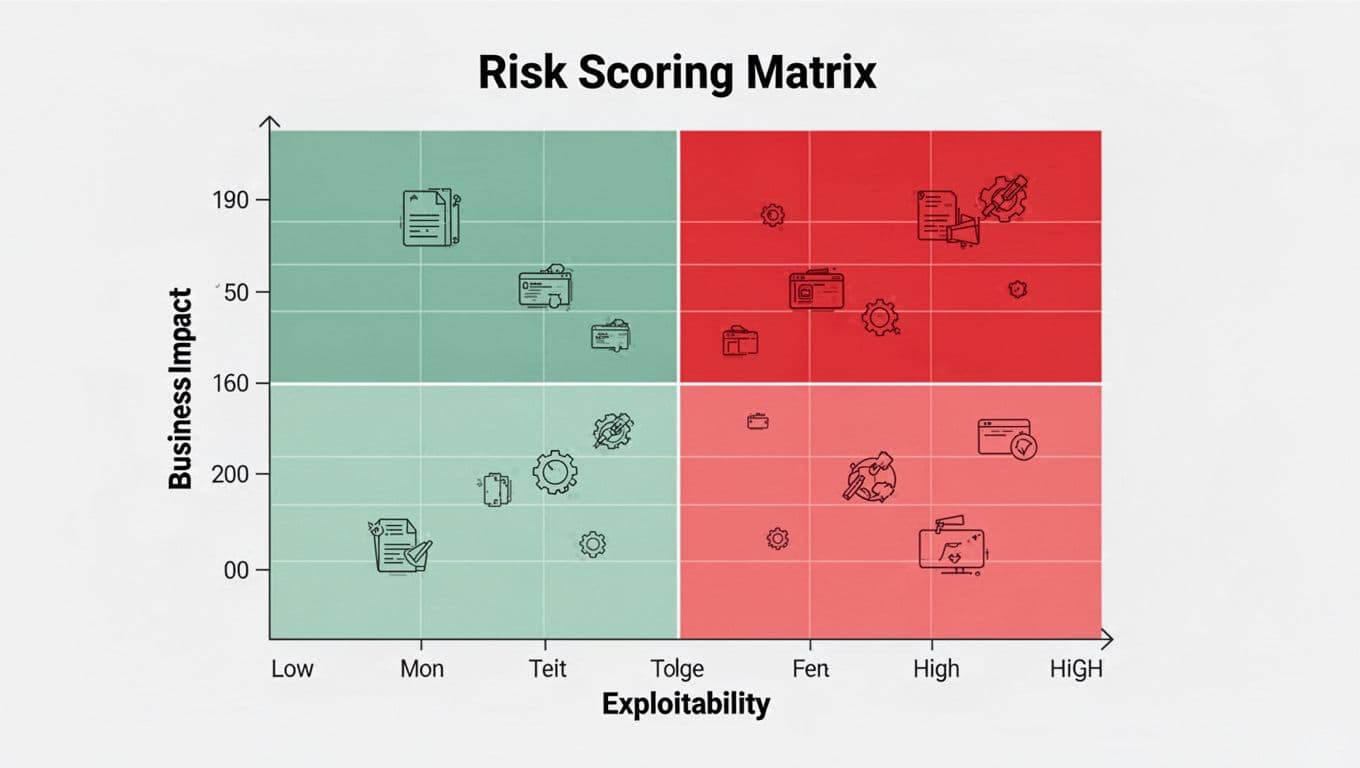
Larger icons mark higher-priority assets. Green stays low risk.
Automation shines here. Scripts pull cloud logs, run simulations, and update dashboards.
Tackling Attack Paths in Hybrid Setups
Attack paths span environments. An external probe hits a public bucket. It pivots to on-prem via federated identities.
Prioritization spots these chains. Map from perimeter to critical assets. Focus on paths with high likelihood.
Use MITRE ATT&CK for tactics. Initial access via unpatched services leads to privilege escalation.
In hybrid setups, ephemeral pods complicate paths. They grant temporary access but leave logs scattered.
Break paths at chokepoints. Fix a shared IAM role that enables escalation across clouds.
XM Cyber covers multi-cloud paths. Their cloud security use case aligns with frameworks like NIST.
Simulate paths weekly. Tools validate reachability against controls.
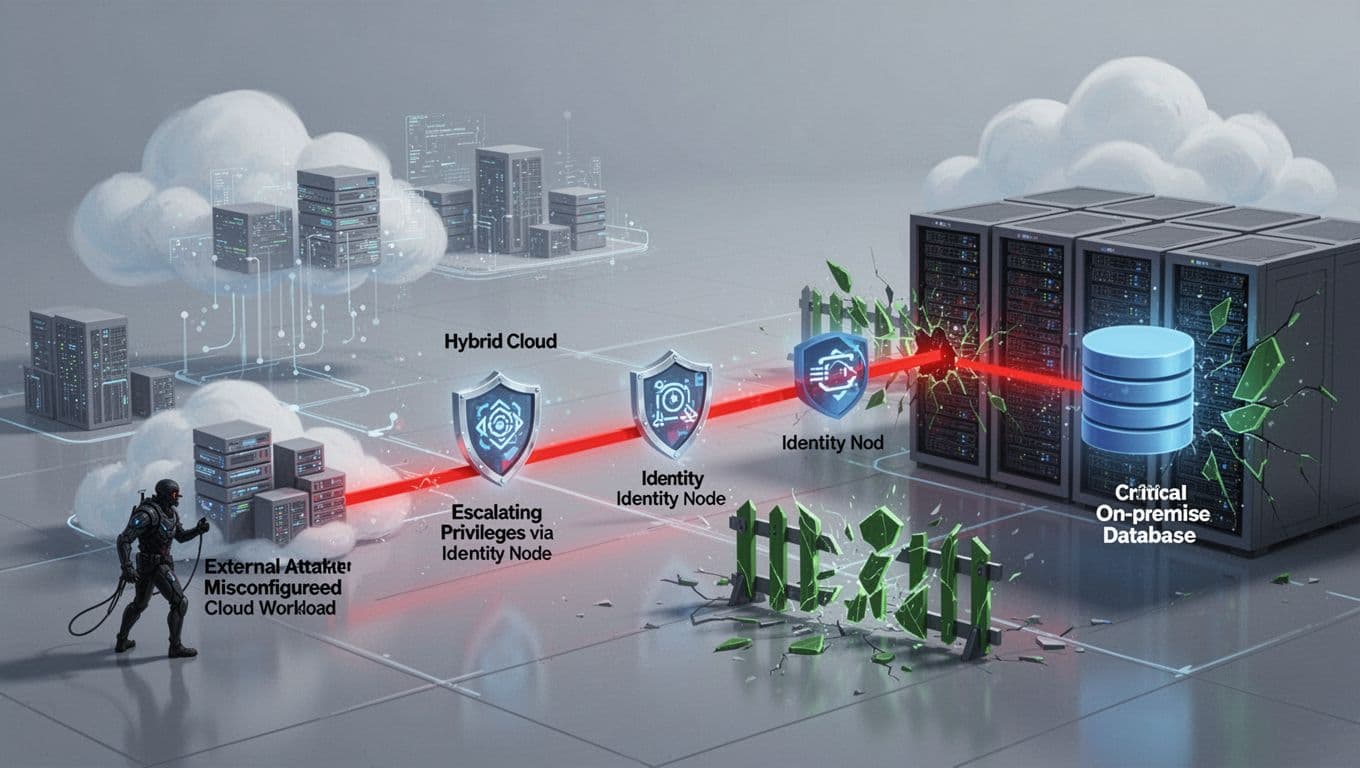
Broken barriers show exploitation points.
Teams remediate faster when paths tie to business assets. One fix stops multiple threats.
Aligning with NIST and MITRE Standards
NIST CSF structures efforts. Govern sets policies. Identify catalogs assets and risks.
Protect enforces zero trust. Detect uses unified logs. Respond plans playbooks.
MITRE ATT&CK details techniques. Map exposures to tactics like lateral movement.
In 2026, blend them. NIST for strategy, ATT&CK for threats. Zero trust verifies access continuously.
NIST SP 800-53 covers hybrid controls. Encrypt data at rest and in transit. Segment networks with microsegmentation.
FedRAMP baselines cloud configs. HITRUST suits regulated industries.
Tag workloads per NIST. Monitor drift against baselines.
Centralized platforms unify views. AI spots anomalies across silos.
Tenable’s whitepaper outlines principles. Download it for hybrid strategies.
Standards ensure compliance. They also sharpen prioritization.
Actionable Steps to Implement Prioritization
Start small. Inventory assets across environments. Use cloud APIs for dynamic discovery.
Choose tools that integrate. Agentless scanners for clouds, agents for on-prem.
Build your score as shown earlier. Pilot on one workload type, like Kubernetes.
Set thresholds. Red exposures trigger alerts. Assign owners via tags.
Automate remediation. Playbooks patch vulns or revoke privileges.
Review monthly. Adjust for new threats.
Train teams on paths. Run tabletop exercises.
Scale to full hybrid. Monitor identity with just-in-time access.
By 2026, automation dominates. Firms with visibility automate 70% of fixes.
If gaps persist, consider experts. Book a Discovery Call with Bud Consulting to assess your setup.
Key Takeaways
Hybrid clouds demand smart prioritization. Frameworks cut through noise by scoring exploitability, impact, identities, and paths.
Use the matrix and pipeline as blueprints. Align with NIST CSF and MITRE ATT&CK for structure.
Implement now. Start with inventory and scoring. You’ll shrink breach costs and response times.
Focus stays on what attackers hit first. Your defenses strengthen across the board.