table of contents
Your product roadmap hits a snag. Engineers build fast, but privacy risks pile up. Regulators knock, and users walk away. A privacy by design engineer fixes that. They bake protections into code from day one.
These pros turn legal musts into working systems. Think AI models that dodge bias fines or apps that handle data flows without leaks. In 2026, with EU AI Act rules live and global fines topping billions, you can’t afford slip-ups.
This guide walks you through spotting top talent. You’ll learn skills to seek, questions to ask, and steps to hire right.
Understand the Privacy by Design Engineer Role
Privacy by design engineers work in product teams. They spot data risks early and code fixes. Unlike add-on audits, they shape systems upfront.
Take a mobile app with user tracking. A standard developer adds features. This engineer asks: Does it need location data? Can we anonymize it? They code differential privacy or federated learning to keep insights without raw user info.
Their day mixes code, reviews, and talks. They run privacy impact assessments. They build tools for data deletion requests. And they guide devs on regs like GDPR or CCPA.
Google’s Fuchsia platform job shows this in action. Engineers there define privacy needs for launches and review features across teams. See the full Google Privacy Engineer role. Real work means real impact.
Expect them to automate checks. In 2026, with AI governance hot, they ensure models comply without slowing teams.
Why Hire One in 2026
Fines hit $4.88 million per breach last year. EU AI Act kicks in August, demanding high-risk AI checks. GDPR enforces data minimization. US states pile on with APRA-like rules.
AI changes everything. Models infer sensitive info from normal data. Privacy teams lag; only 13% use AI tools yet. Demand surges for engineers who handle this.
Cisco’s 2026 Data Privacy Benchmark flags the gap. Firms chase AI but skip governance. Privacy by design closes it.
Your payoff? Faster launches. Lower risks. Trust from users. Startups with these hires scale global without rework.
Bud Consulting sees it daily. Teams without them scramble on DSARs or bias audits. Hire now, or pay later.
What Sets a Privacy by Design Engineer Apart
Privacy engineering differs from security or legal work. Security engineers block hacks. Privacy ones limit data collection. Legal counsel writes policies. Privacy engineers code them in.
Data governance pros map flows. Privacy engineers build controls like retention policies or access gates.
Here’s a quick breakdown:
| Role | Focus | Key Output |
|---|---|---|
| Privacy Engineer | Embed privacy in code/design | Automated DSAR tools, anonymization pipelines |
| Security Engineer | Threat defense | Firewalls, encryption at rest |
| Privacy Counsel | Policy/regs | Compliance docs, consent forms |
| Data Governance | Data quality/lineage | Catalogs, stewardship rules |
Strong candidates bridge teams. At Waymo, they code C++ for AV data pipelines under GDPR. Check Waymo’s staff role.
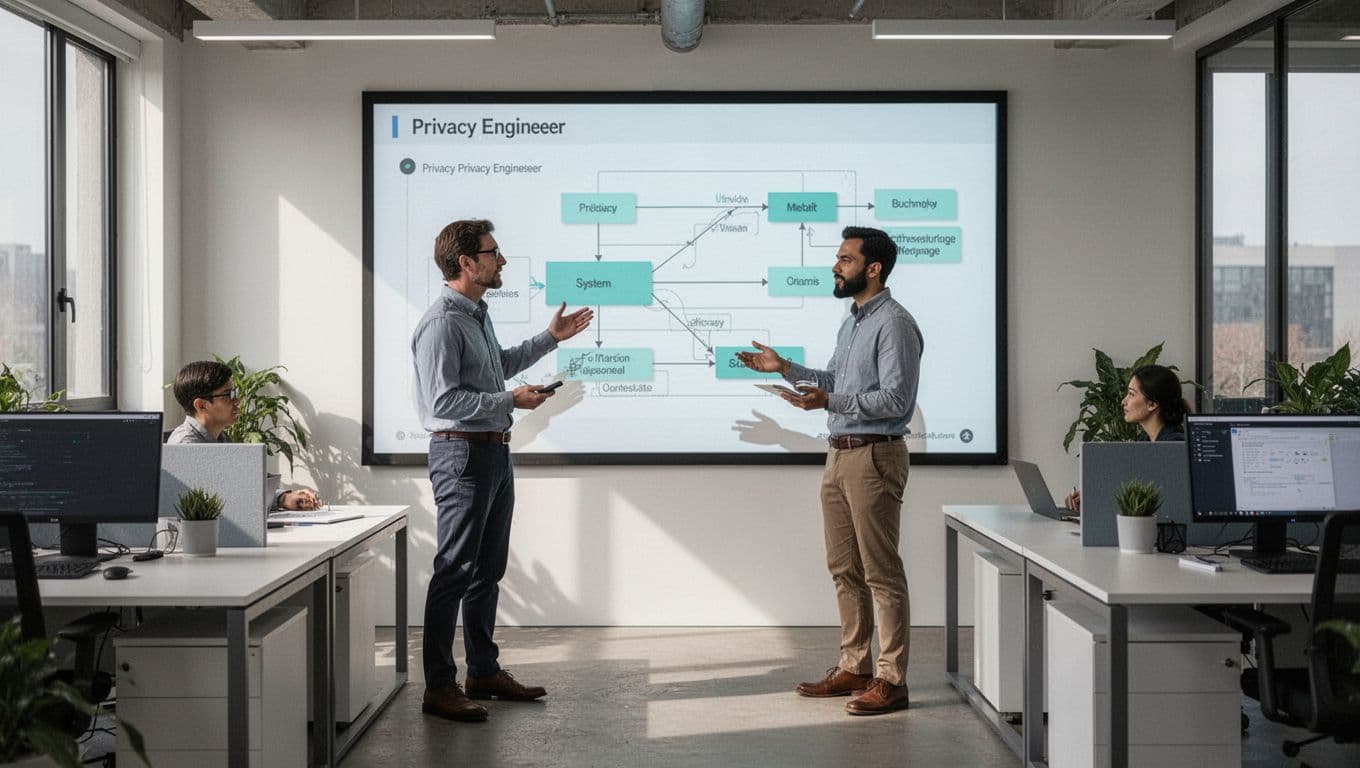
They collaborate like in this scene. One engineer leads reviews with devs. No silos.
Essential Skills Every Privacy by Design Engineer Needs
Look for full-stack chops with privacy twists. They code in Python, Go, or Java. But they prioritize data minimization.
Core skills include:
- Privacy impact assessments and threat modeling.
- Tools like differential privacy, homomorphic encryption.
- Data flow diagramming and automation (CI/CD privacy gates).
- Reg knowledge: EU AI Act, GDPR, CCPA (no legal advice, just tech fit).
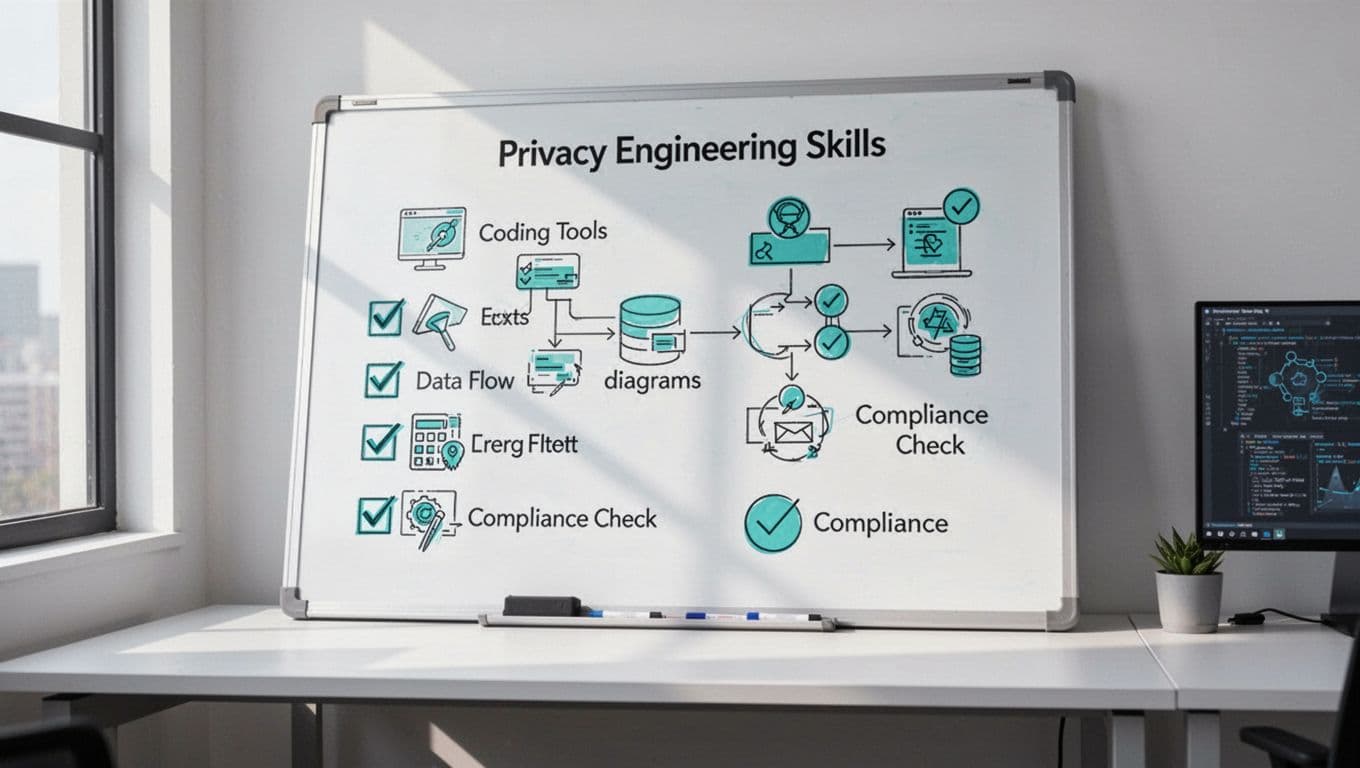
Experience matters. Top hires built PETs at 1Password or ran audits for AI datasets. Read Privacy Bootcamp’s overview.
Soft skills count too. They translate regs to devs. Explain why federated learning beats central training.
In 2026, AI/ML focus rules. They govern inferred data risks. Seek certs like CIPP/E plus engineering backgrounds.
Craft a Job Description That Attracts Stars
Start with impact. “Build privacy into AI products from design phase.” List duties: Review architectures, implement controls, automate compliance.
Set KPIs. Measure success clearly.
| KPI | Target | Why It Matters |
|---|---|---|
| Privacy reviews completed | 100% features pre-launch | Catches issues early |
| DSAR response time | Under 30 days | Meets regs |
| Data breach incidents | Zero from design flaws | Proves protection |
| Team training sessions | Quarterly | Builds culture |
Salary? Competitive, $180K-$250K base in US hubs, per demand trends. Offer equity for seniors.
Post on LinkedIn, niche boards. Highlight remote options.
Where to Find Top Privacy by Design Engineers
Networks beat job boards. Hit USENIX events or IAPP forums. Career advice from USENIX PEPR covers resumes to interviews.
Recruiters like Bud Consulting specialize here. We vet for secure SDLC fits.
Check GitHub for privacy tools. Look at ex-Google or Meta hires via Simplify.jobs.
In 2026, hybrid legal-tech paths rise. Leonid Group’s insights stress adaptability.
Interview Questions That Reveal True Expertise
Probe real work. Skip “What’s GDPR?” Ask: “Walk us through anonymizing ML training data.”
Key questions:
- Describe a privacy flaw you fixed in production. What tools? Outcome?
- How do you handle EU AI Act high-risk systems in SDLC?
- Build a quick data flow diagram for our user analytics. Spot risks.
- Explain differential privacy to a product manager.
Test code. Give a scenario: Automate retention for logs. Watch for minimization first.

Forrester’s 2026 trends guide AI questions. Great hires geek out on governance.
Reference check past impacts. Did they cut risks 30%?
Conclusion
Hire a privacy by design engineer to future-proof your stack. They turn regs into strengths, especially with AI rules tightening.
Focus on skills like automation and collaboration. Use sharp interviews and clear KPIs. You’ll build compliant, trusted products.
Ready to fill the role? Book a Discovery Call with Bud Consulting. We connect you with vetted pros fast.