table of contents
A single breach can wipe out years of customer trust. As a product manager, you make choices that either block hackers or hand them the keys. Security isn’t just an engineering task anymore. It shapes your features, roadmaps, and launches.
You juggle user needs, timelines, and budgets. But ignore security, and your product risks data leaks or downtime. This guide gives you the basics. You’ll learn threats, questions for your team, and checklists to build security in from day one.
Start with why this matters for your role.
Why Security Basics Matter to Product Managers
Security affects every product decision. Customers expect safe apps. One weak spot can lead to lost revenue or lawsuits.
Think about recent breaches. Companies lose millions from simple oversights. As a PM, you spot these risks early. You balance features with protection.
Your roadmap sets the tone. Push new login flows without access checks, and users suffer. Security training helps you prioritize right. It keeps launches smooth.
Ask yourself this: Does your current sprint include security time? Most teams don’t. Reserve 10-20% capacity for it. That way, updates don’t derail features.
Product managers who grasp basics collaborate better. You talk the language with engineers. No more vague handoffs.
For more on this tension, check ProductPlan’s guide on security knowledge for PMs. It stresses roadmap integration.
Security builds trust. Safe products retain users. They also open enterprise deals. Basic training pays off fast.
Common Security Threats Product Managers Face
Hackers target weak points in apps you build. Know the big ones to guide decisions.
Injection attacks top the list. Bad input slips into databases. It steals data. For example, a search bar without checks lets attackers run code.
Cross-site scripting follows. Malicious scripts run in users’ browsers. They steal sessions. Imagine a comment field that executes user code.
Broken access control ranks high too. Users see others’ data. Think admin pages open to all.
The OWASP Top 10 for 2025 lists these risks. It includes security misconfigurations and supply chain issues. PMs use it to flag priorities.

Phishing tricks users into bad clicks. It bypasses tech controls. Train teams on it.
Encryption gaps expose data in transit. Without it, snoops grab info.
You don’t code fixes. But you ask: Does this feature validate inputs? How do we log access?
Spot these in designs. Push audits before launch. Early fixes cost less.
Key Questions to Ask Your Security and Engineering Teams
Good questions drive secure products. Start conversations now.
On authentication: “How do we enforce multi-factor auth? What about password rules?”
For data: “Where do we store user info? Is it encrypted at rest and in transit?”
Ask about logging: “Do we track failed logins and changes? Who reviews alerts?”
Vendors matter too. “Have we scanned third-party tools? What’s our supply chain plan?”
From OWASP’s Product Security Guide, focus on threats like STRIDE. It helps model risks.
In roadmaps, probe: “Which OWASP risks hit our top features?”
Engineering might say it’s covered. Push for proof. Request threat models per epic.
These questions tie security to priorities. They show risks in business terms. A breach costs more than delays.
Use them in standups. Track answers in Jira. It builds habits.
Integrating Security into Your Product Roadmap
Security lives in your roadmap, not an afterthought. Bake it in quarterly.
First, map features to risks. New payment flow? Check injection and access.
Allocate sprints. Dedicate one per quarter to patches and audits.
Prioritize with impact scores. High-risk, high-user features first.
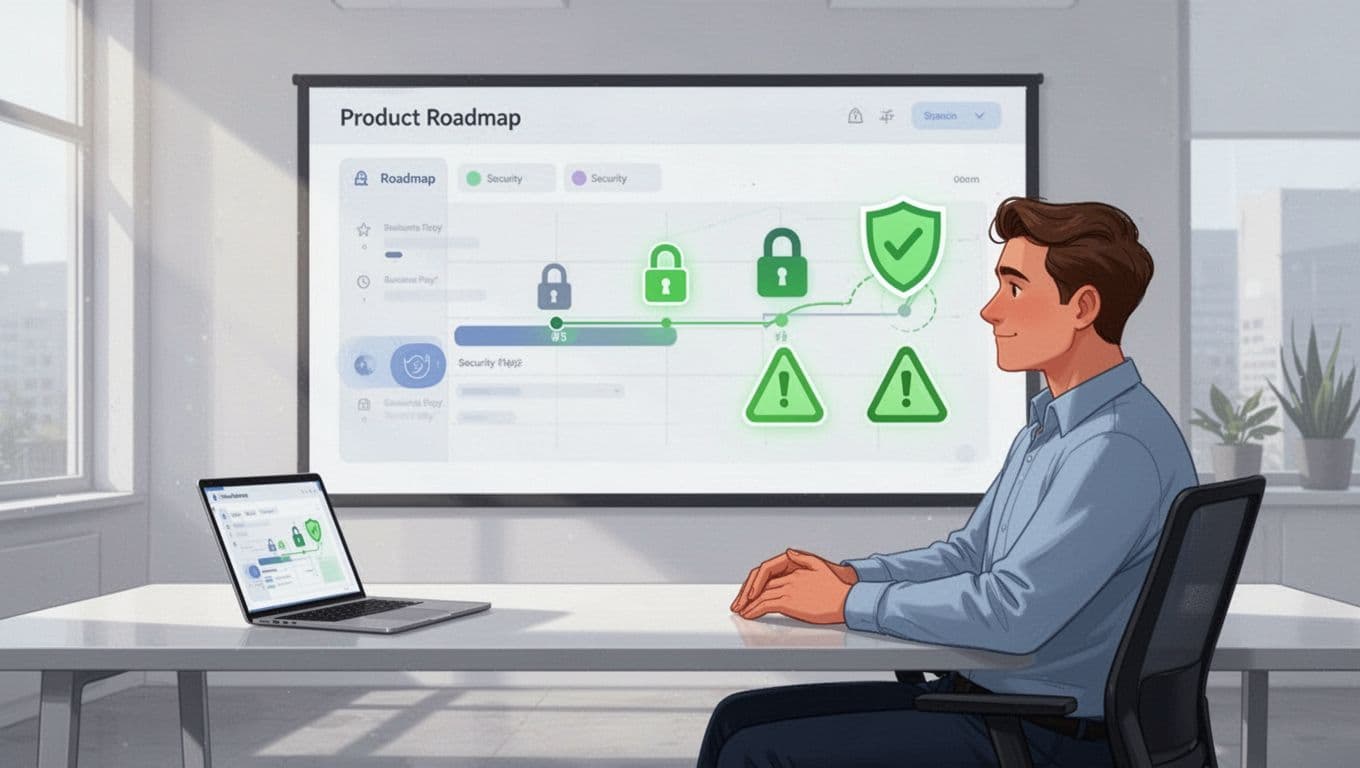
Tools help. Use Jira plugins for security tickets. Tag them “sec-fix.”
Align with sales. Enterprise buyers demand SOC 2. Plan certifications early.
From Venture in Security’s post, PMs own this. Learn vocab like “least privilege.”
Review quarterly. Scan for OWASP gaps. Adjust based on threats.
This approach avoids fire drills. Secure roadmaps launch faster. Customers notice.
Your Pre-Launch Security Checklist
Before launch, run this checklist. It catches gaps fast.
- Authentication: Multi-factor enabled? Sessions timeout?
- Data protection: Encryption for sensitive info? PII minimized?
- Access controls: Role-based? No defaults to admin?
- Inputs/outputs: Sanitized? No injection risks?
- Logging: Key events tracked? Alerts set?
- Third-parties: Scanned? Contracts cover security?
- Testing: Pen test passed? Automated scans clean?

For a full template, see Nullfort’s product security checklist. It adds metrics and training.
Run it with security leads. Score gaps. Fix critical ones pre-launch.
Post-launch, repeat monthly. It scales with growth.
This checklist fits PM workflows. No deep tech needed.
Security’s Role in Feature Design and Prioritization
Design features with security first. It saves rework.
In user stories, add acceptance: “As a user, I log in securely so my data stays private.”
Prioritize by risk. Use a matrix: user impact times exploit ease.
For example, API endpoints need auth by default. Delay if not.
Customer trust hinges here. Secure designs win reviews.
From Products That Count’s intro, start with data minimization.
Train your team. Short sessions on OWASP basics.
Measure success. Track breach attempts or audit passes.
This shifts security left. Features ship safer.
Conclusion
Security basics empower you to lead safer products. You’ve got threats, questions, checklists, and roadmap tips.
Focus on integration. Ask smart questions. Run checklists every launch.
Your role matters most. Secure decisions build lasting trust.
Need help scaling this? Book a Discovery Call with Bud Consulting for expert guidance.