table of contents
Your Customer Success Manager just shared a demo link with a prospect. It works great. But did they use temporary credentials? Or isolate it from production data?
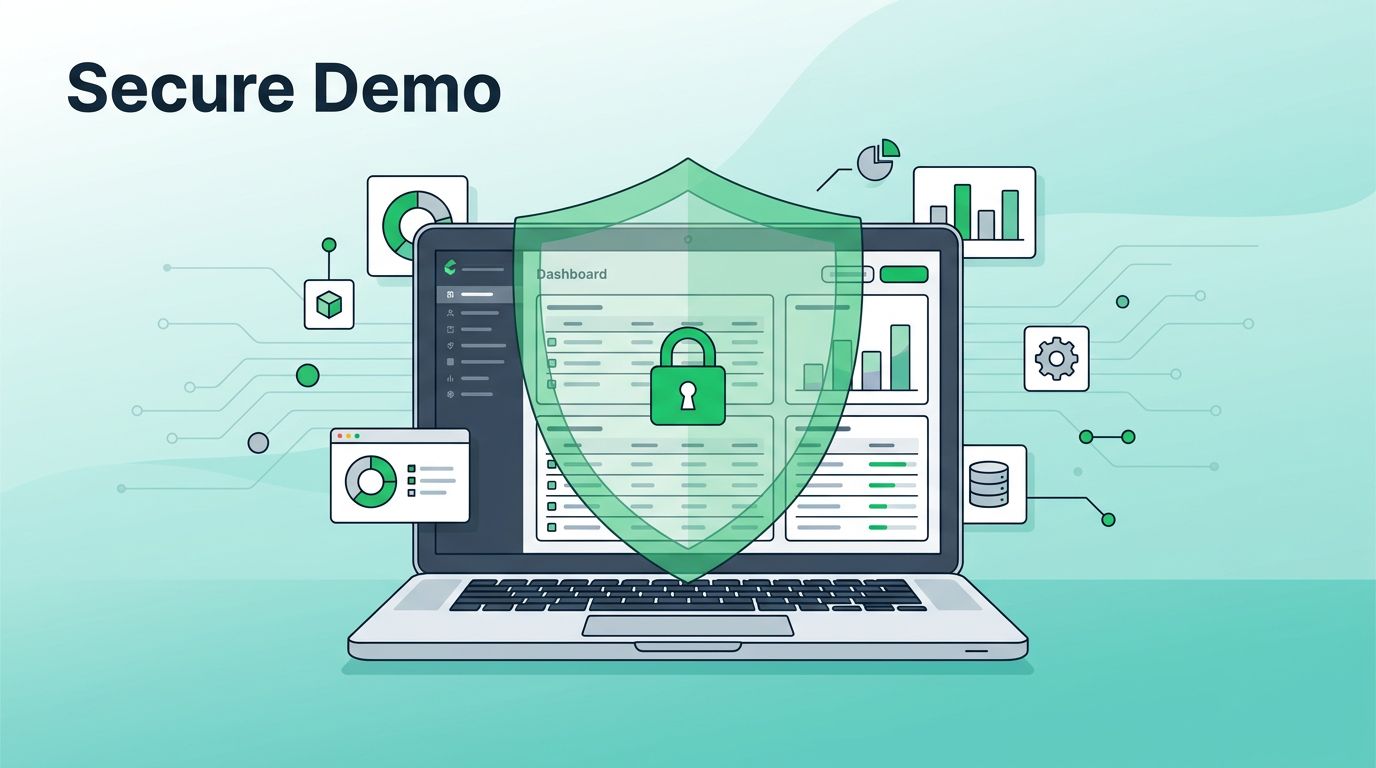
CSMs handle demos daily. They show value fast. Yet one slip exposes customer info or internal tools. Secure demo access fixes that. It keeps risks low while teams close deals.
This guide shares actionable steps. You will learn to train your team on least privilege, temp access, and monitoring. Start building habits that stick.
Why Secure Demo Access Matters in SaaS
CSMs drive renewals and upsells. Demos prove your product’s fit. But production environments hold real data. Mix them, and breaches follow.
Teams often reuse prod logins for speed. That’s risky. Prospects see live customer lists. Or worse, they poke around unchecked.
Separate demo setups change this. Use synthetic data. Apply role-based controls. CSMs grant view-only access. No edits, no exports.
For example, a CSM demos analytics. They spin up a sandbox with fake metrics. Prospect logs in via SSO. Session ends in 24 hours. Clean and safe.
This builds trust. Prospects focus on features. Your team avoids alerts from security ops.
Adopt these practices early. Growing SaaS firms cut incidents by 70% with isolated demos, per Reprise’s demo security guide.
Building Secure Demo Environments
Start with isolation. Demo environments sit apart from production. No shared databases. No live APIs.
Pick tools that auto-provision sandboxes. Templates match customer scenarios. Populate with mock data. Tools like these scale for busy CS teams.
CSMs request a demo instance. It spins up in minutes. They assign roles: viewer for prospects, editor for themselves.

Enforce least privilege. Prospects see dashboards only. No admin panels. CSMs get timed elevation if needed.
Self-hosted options add control. They encrypt data at rest and in transit. Set retention to 30 days max. Check Demogo’s self-hosted demo security tips for details.
Test environments weekly. Run scans for leaks. Document setups in your wiki. New hires reference it fast.
Core Principles of Secure Access
Least privilege heads the list. Grant minimum permissions. Prospects need read access. Nothing more.
Temporary credentials come next. No permanent logins. Use 24-48 hour tokens. Auto-revoke on expiry.
Layer on MFA and SSO. Prospects auth via their identity provider. CSMs use hardware keys. Block weak passwords.
Policies guide it all. Write a one-page doc. Cover when to use demos. Who approves access. Steps for cleanup.
| Principle | Why It Works | Quick Win |
|---|---|---|
| Least Privilege | Limits damage if shared | Role templates in IAM |
| Temp Credentials | No lingering access | Auto-expire scripts |
| MFA/SSO | Stops credential stuffing | Enforce on all portals |
| Policies | Builds consistency | Quarterly reviews |
This table sums basics. Apply them, and access stays tight. Review Spendflo’s SaaS access control practices for more.
Train CSMs to check these before every share. Habits form quick.
Hands-On Training for Secure Practices
Onboarding sets the tone. New CSMs shadow seniors first. They watch three demos. Note access steps.
Then hands-on. Give sandbox tasks. “Spin up a demo. Grant viewer access. Share the link.” Time it under 10 minutes.
Role-play scenarios. Prospect wants admin view. CSM explains limits. Offers screen share instead.

Group sessions work best. 90 minutes max. Cover policy flowchart. Practice revokes. Quiz on mistakes.
Ongoing reinforcement matters. Monthly 15-minute huddles. Share recent wins. Role-play edge cases.
Tools help. Build a demo library. Tag by use case. CSMs pull ready links. Less setup, more security.
Track completion. Use LMS for modules. Certify quarterly. Top performers mentor juniors.
Common Mistakes and Fixes
CSMs rush. They copy prod URLs. Fix: Bookmark sandbox portal only.
Shared accounts tempt. One login for the team. Risky. Fix: Individual SSO. Audit trails per user.
No cleanup. Demos linger. Fix: Auto-teardown after 48 hours. Alerts for manual ones.
Forgetting logs. No record of who accessed what. Fix: Central dashboard. CSMs review before close.
Partner demos trip teams. They need self-serve. Fix: Time-boxed creds via forms. See Pedowitz Group’s partner demo advice.
Address these in training. Use real tickets. “Last month, this happened. Here’s the better way.”
Monitoring Demo Access Activity
Visibility prevents issues. Log every login. Track sessions. Flag anomalies like off-hours access.
Dashboards show patterns. High usage? Extend sandboxes. Spikes from one IP? Investigate.
Security reviews weekly. CSMs join. Learn from logs. “This demo expired clean.”
Integrate alerts. Slack pings for failed MFA. Email for long sessions.

Tools centralize it. SIEM for big teams. Simple CSV exports for starters.
Feed learnings back to training. Update policies yearly. Teams stay sharp.
Conclusion
Secure demo access protects your SaaS moat. Train on isolation, temp creds, and monitoring. CSMs deliver value without risks.
Start small. Roll out one principle monthly. Measure via audits. Wins build momentum.
Your team handles demos confidently now. Prospects trust you more. For tailored help scaling this, Book a Discovery Call with Bud Consulting.
Strong habits last. Keep reinforcing them.