table of contents
You’re a CISO or IT director facing relentless cyber threats. Cloud migrations accelerate, hybrid teams work from anywhere, and AI tools introduce new risks. Yet, your zero trust rollout stalls because you lack an architect who can tie it all together.
Demand outstrips supply right now. Skilled zero trust architects command premiums, but the right hire speeds up maturity and cuts breach risks. This guide walks you through defining the role, spotting talent, and avoiding traps so you build a secure foundation fast.
Understand the Zero Trust Architect Role
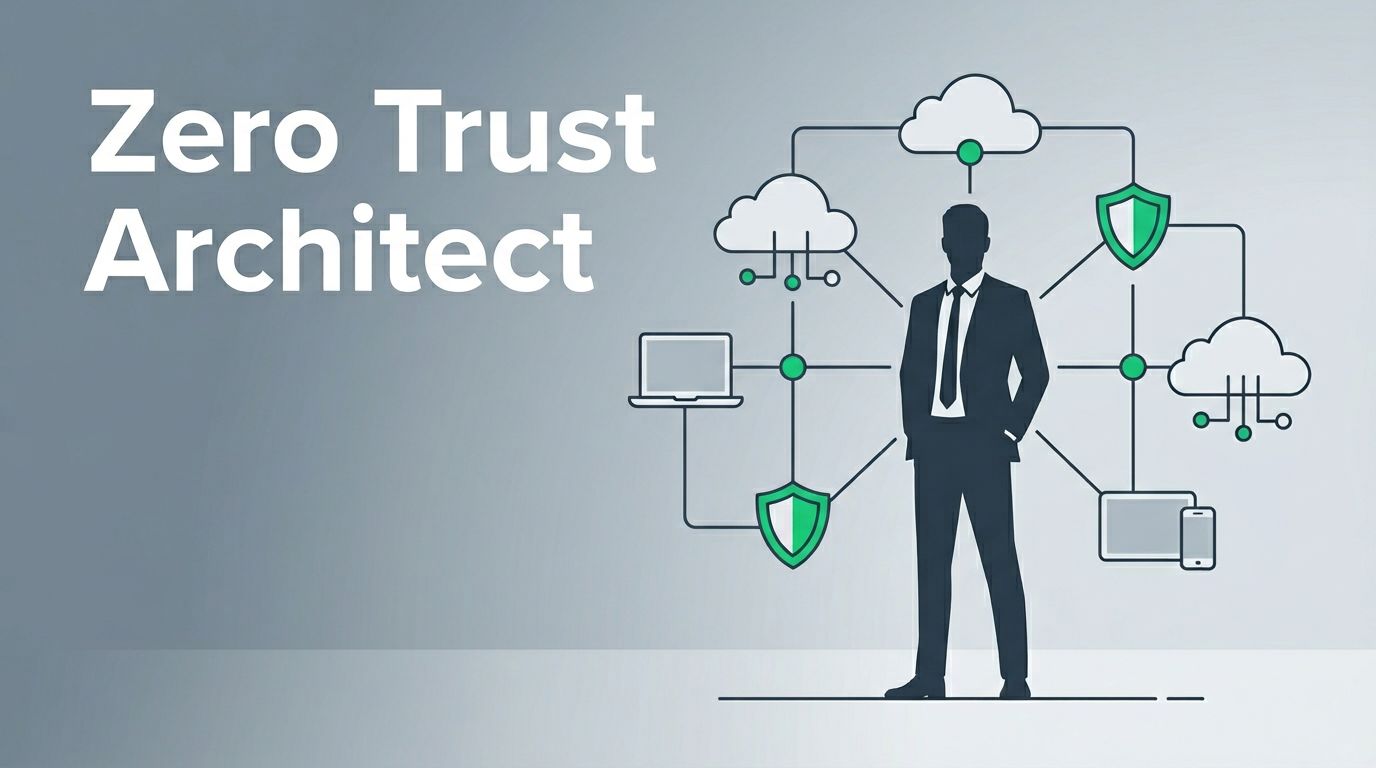
A zero trust architect designs security that verifies every access attempt. They assume breaches happen inside your network. No more perimeter trust.
These pros map controls across identity, devices, networks, apps, data, cloud setups, and monitoring. They align designs to NIST SP 800-207 standards or CISA’s Zero Trust Maturity Model. In practice, that means crafting roadmaps for least-privilege access in hybrid environments.
Expect them to lead from strategy to deployment. They evaluate tools like ZTNA or SASE, integrate with existing stacks, and measure progress against maturity stages: traditional, initial, advanced, optimal. For example, they shift from VPNs to identity-based entry points.
In 2026’s cloud-first world, they handle multi-cloud sprawl. They ensure AI workloads get continuous verification too. Without this expertise, teams chase shadows instead of locking down real paths.
Hiring managers often confuse them with general security engineers. Architects think enterprise-wide. They document designs, brief executives, and collaborate with DevOps. Look for proven roadmaps in past roles.
Bud Consulting sees this role evolve. Architects now prioritize identity-centric controls because users roam freely. They also bake in AI threat detection to spot anomalies early.
Key Skills Every Zero Trust Architect Needs
Top architects master technical depth and business sense. Start with identity and access management. They implement MFA, PAM, and conditional policies using tools like Microsoft Entra ID.
Device security follows. They enforce posture checks before granting access. Network skills cover microsegmentation and SD-WAN. Application controls block unauthorized code execution.
Data protection demands classification and DLP. Cloud expertise spans AWS, Azure, GCP with native zero trust features. Monitoring ties it together via SIEM and analytics for real-time visibility.

Hands-on experience matters most. They script automations in Python or Terraform. Certifications like CISSP or CCSP help, but real projects prove skills. For instance, check for work with EDR/XDR integrations.
Soft skills count too. They translate tech to stakeholders. In interviews, probe for examples of failed implementations and fixes.
Current trends show demand spikes for AI-savvy architects. They secure model training data and detect prompt injections. Hybrid work pushes identity focus; 81% of firms plan zero trust adoption soon.
Screen resumes for these pillars. A strong candidate lists specific tools and outcomes, like reducing access risks by 40%.
Align the Role to Zero Trust Pillars
Zero trust rests on seven pillars. Your architect must own them all. Identity verifies users continuously. Devices prove health via agents.
Networks use segmentation to limit lateral moves. Applications gatekeep APIs. Data gets encrypted and labeled. Cloud infrastructure demands workload isolation. Monitoring provides analytics and automation.
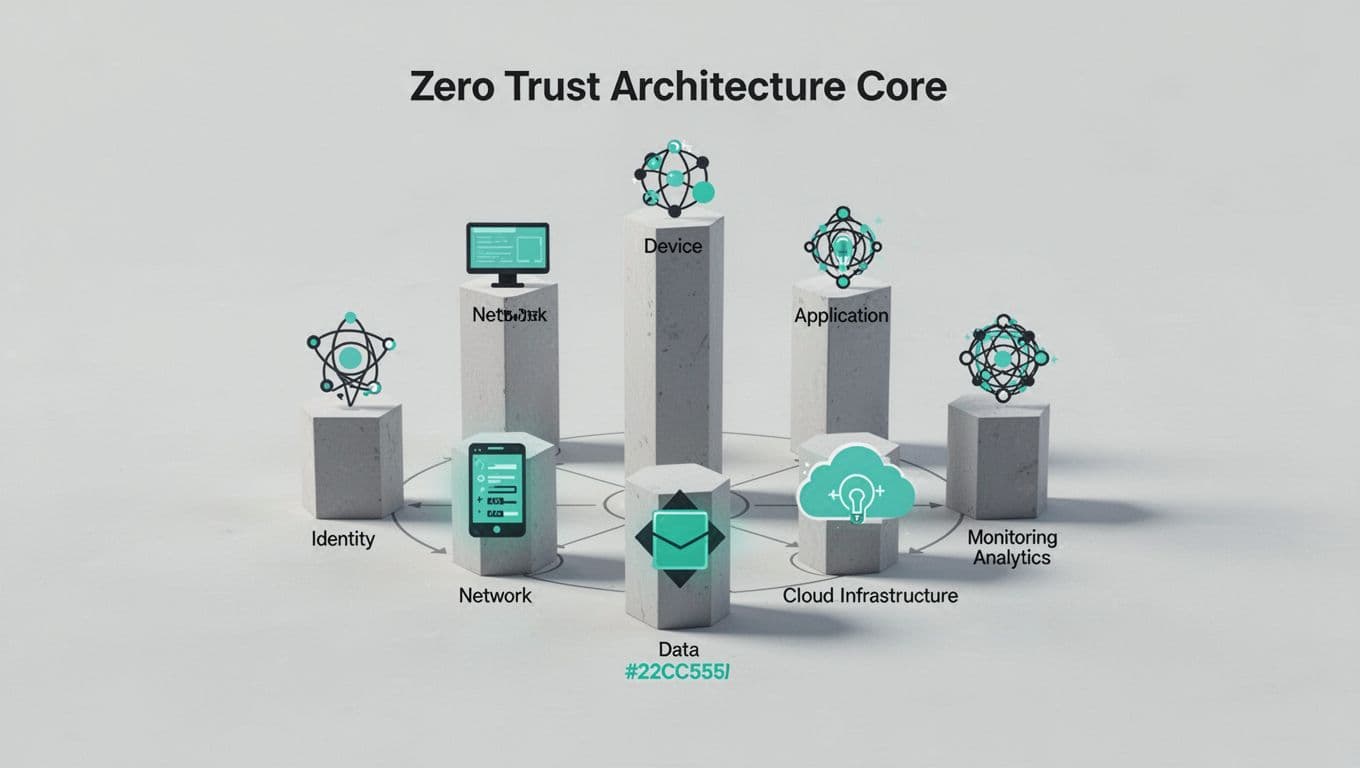
Tie the job to your enterprise program. Match pillars to frameworks like NIST’s Zero Trust Architecture. For federal work, reference DoD strategies.
In cloud-heavy setups, prioritize cloud and monitoring. Hybrid teams need strong identity and device pillars. AI adds data pillar emphasis for governance.
Define responsibilities per pillar:
- Identity: Design IAM policies.
- Device: Integrate endpoint controls.
- Network: Build software-defined perimeters.
This alignment prevents siloed efforts. Architects who grasp interconnections deliver cohesive designs.
Assess candidates by mapping their experience. Ask how they handled pillar gaps in past jobs.
Navigate 2026 Hiring Market Realities
Talent shortages hit hard in 2026. Zero trust skills gap widens with cloud and AI booms. Firms scramble for architects amid 65% VPN replacement plans.
Salaries reflect scarcity. Averages hit $170,000, ranging $140,000-$292,000. Mid-career pros earn $140,000-$180,000; seniors top $250,000. Tech hubs like San Francisco add 20-30%. Clearances boost pay by $30,000+.
Factors drive costs: Experience, location, stack depth. San Jose averages $225,000. Equity varies widely.
Demand surges for identity governance, cloud security, fraud analytics. GRC knowledge grows fast. Contractors fill gaps in regulated sectors.
Challenges include implementation delays and quality dips from rushed hires. Train internals or consult experts as bridges.
Orbyt’s salary data shows ranges by city. Adjust offers accordingly.
Craft a Standout Job Description
Postings draw the right pool when specific. Lead with impact: “Design zero trust across identity to monitoring for cloud-first ops.”
List must-haves from pillars. Reference Yardstick’s example for controls in hybrid envs.
Key sections:
Responsibilities: Roadmap creation, tool evals, assessments.
Requirements: 8+ years, IAM/firewall experience, NIST familiarity.
Preferences: AI security, scripting.
Use active language. “Lead microsegmentation” beats vague duties.
Tailor to realities. Highlight hybrid work, cloud mandates.
Vintti’s template covers audits and training well.
Budget time: Post on LinkedIn, Dice. Expect 4-6 weeks to fill.
Run a Targeted Interview Process
Screen fast. Resume review: Seek pillar projects, outcomes.
Phone round: Zero trust basics. “Explain continuous verification.”
Technical deep dive next. Present scenarios: “Secure AI pipeline access.”
Use case studies from Booz Allen’s posting. Probe ZTNA, ICAM.
Panel with engineers. Test collaboration.
Reference checks confirm claims. Ask past bosses about roadmaps delivered.
Offer promptly. Include equity, clearances if needed.
Check Cultural Fit in Zero Trust Teams
Zero trust demands buy-in. Architects must rally DevOps, compliance.
Assess via team chats. Observe interactions.
Look for adapters. They explain concepts simply, embrace feedback.
In hybrid cultures, value remote collaboration tools.
Bud Consulting vets for this. Misalignments cause 30% early exits.
Ask: “Describe bridging sec and dev friction.”
Dodge Common Hiring Mistakes
Skip generalists. Demand pillar proof.
Ignore trends at peril. AI, cloud skills top lists.
Overlook soft skills. Tech alone fails.
Rush without refs. Verify claims.
Underpay. Match market or lose talent.
Use GDIT’s SME example for defense rigor.
Key Takeaways for Hiring Success
Hire architects who master pillars and align to frameworks like CISA or NIST. Focus on 2026 needs: identity in hybrid setups, cloud controls, AI safeguards. Salaries hover at $170,000 average; pay for proven results.
Strong job posts and pillar-based interviews fill roles faster. Cultural matches sustain programs.
The right zero trust architect accelerates maturity and fortifies your posture. Book a Discovery Call with Bud Consulting to source yours today.